Water damage can happen without warning, whether it is caused by a burst pipe, heavy rainfall, appliance failure, or sewage backup. Acting quickly is essential because standing water and excess moisture can cause structural damage, mold growth, and costly repairs. Understanding the water damage restoration process helps homeowners and business owners know what to expect when disaster strikes and why professional assistance is so important.
The goal of water damage restoration is to return a property to its pre-loss condition by removing water, drying affected materials, cleaning contaminated areas, and restoring damaged structures. Every stage plays a vital role in preventing long-term problems while protecting the safety, value, and integrity of your property. By following a proven restoration process, professionals can minimize damage and help you recover faster.
Emergency Response and Initial Inspection
The first step in any restoration project is responding quickly to the emergency. Water can spread rapidly throughout a building, soaking walls, flooring, insulation, furniture, and personal belongings within a short period. The sooner professionals arrive on-site, the greater the chance of reducing extensive damage and saving affected materials.
During the initial inspection, restoration specialists assess the source of the water intrusion and determine the category of water involved. Clean water from a broken supply line requires a different approach than contaminated water from sewage backups or flooding. Identifying the water source also helps prevent additional damage before restoration begins.
Technicians carefully inspect every affected area using moisture meters, thermal imaging cameras, and other specialized equipment. Hidden moisture behind walls or beneath flooring can continue causing damage if left untreated.
After completing the assessment, the restoration team develops a customized plan based on the property’s condition. This detailed evaluation ensures every affected area receives the appropriate treatment throughout the restoration process.
Water Removal and Extraction
Removing standing water is one of the most important phases of the restoration process. Large volumes of water can quickly weaken building materials, damage flooring, and create ideal conditions for mold growth. Fast extraction significantly reduces these risks.
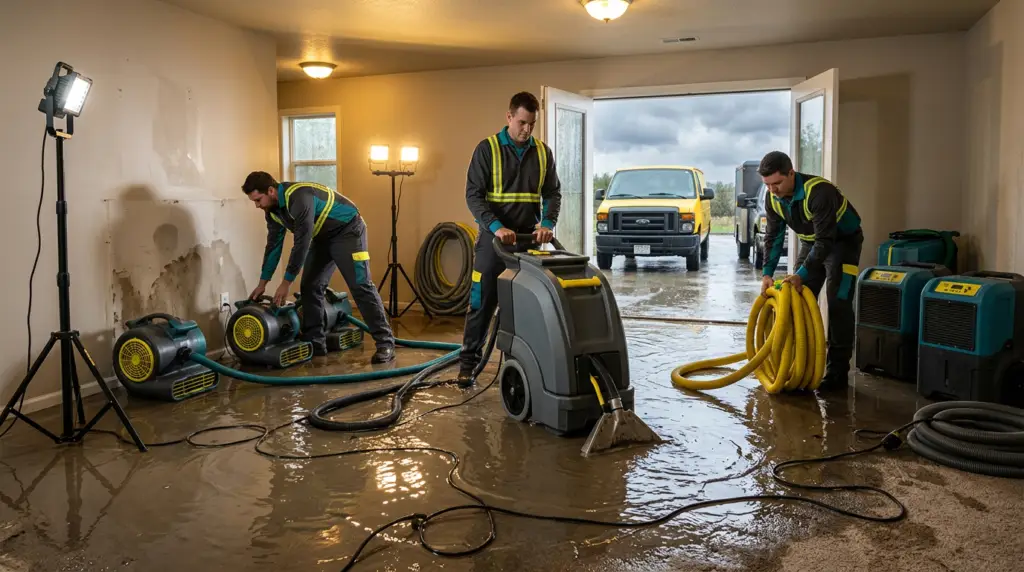
Professional restoration companies use high-powered pumps and industrial vacuums designed to remove water efficiently from residential and commercial properties. The equipment is selected based on the amount of water present and the size of the affected area.
Water extraction goes beyond removing visible water. Moisture trapped beneath carpets, inside walls, and under flooring must also be addressed to prevent future issues. Specialized extraction tools help remove hidden moisture that ordinary household equipment cannot reach.
Completing this stage quickly allows the drying process to begin sooner, reducing the overall restoration timeline and minimizing permanent damage to the structure.
Drying and Dehumidification
Even after standing water has been removed, significant moisture often remains inside building materials. Drying and dehumidification are critical steps that help eliminate hidden moisture before it causes structural deterioration or mold development.
Industrial air movers circulate air throughout the property, accelerating evaporation from walls, floors, ceilings, and other surfaces. At the same time, commercial dehumidifiers remove moisture from the air to create an environment that supports efficient drying.
Technicians continuously monitor humidity levels and moisture readings during this phase. Drying equipment may be repositioned as conditions change to ensure every affected area reaches acceptable moisture levels.
The drying process can take several days depending on the extent of the damage, building materials, weather conditions, and indoor humidity. Proper monitoring ensures the property is thoroughly dried rather than simply appearing dry on the surface.
Cleaning and Sanitizing Affected Areas
Once the structure is dry, the next priority is cleaning and sanitizing the affected areas. Water damage often leaves behind dirt, bacteria, unpleasant odors, and other contaminants that require professional treatment.
Restoration specialists clean surfaces using industry-approved cleaning products designed for different materials. Carpets, upholstery, furniture, and other salvageable belongings may also undergo specialized cleaning methods depending on the type of damage.
Odor removal is another important part of this stage. Moisture trapped within materials can create lingering musty smells that ordinary cleaning products cannot eliminate. Advanced deodorization techniques help restore a fresh indoor environment.
Sanitizing the property is especially important when dealing with contaminated water sources. Proper cleaning helps protect occupants while preparing the structure for any necessary repairs.
Mold Prevention and Moisture Control
One of the biggest concerns following water damage is mold growth. Mold can begin developing within 24 to 48 hours when excess moisture remains inside a building, making moisture control an essential part of the restoration process.
Restoration professionals inspect the property for signs of mold while identifying areas that remain damp. If mold is discovered, appropriate remediation procedures may be performed before reconstruction begins.
Controlling humidity levels is equally important. Proper ventilation, dehumidification, and moisture monitoring reduce the risk of future mold growth while protecting the building’s structural components.
Preventative measures taken during restoration can save property owners from expensive repairs later. Eliminating hidden moisture today helps create a healthier indoor environment for years to come.
Repairing Damaged Building Materials
After drying and cleaning are complete, attention shifts to repairing damaged portions of the property. The amount of reconstruction required depends on how severely the water affected the structure.
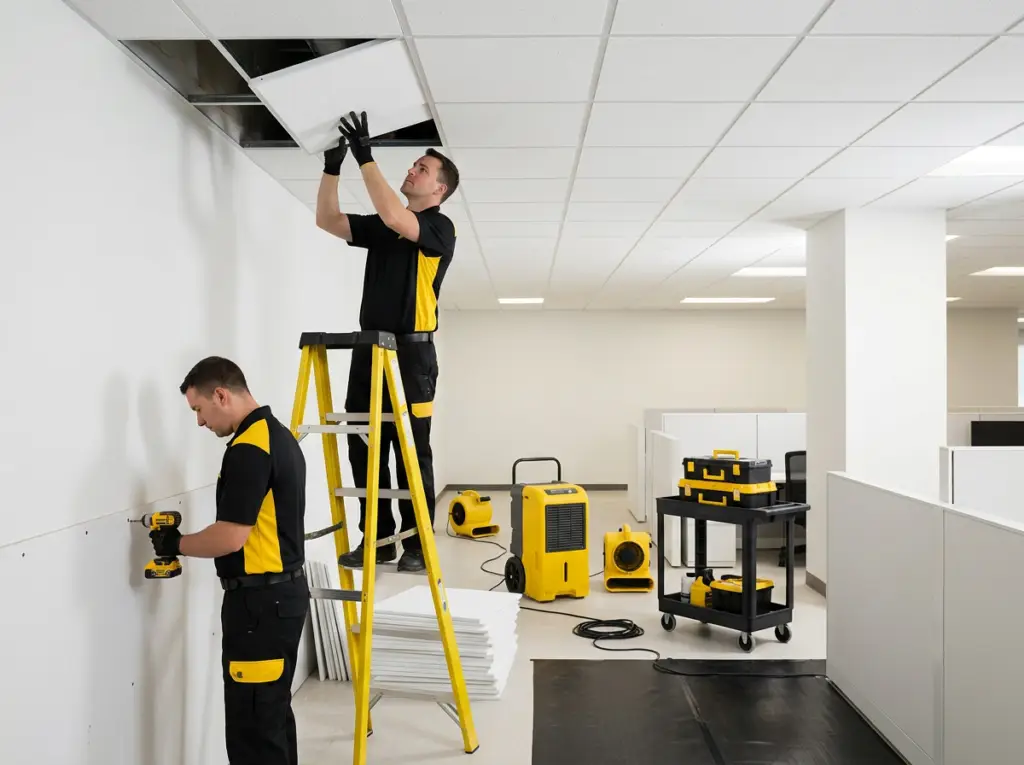
Minor repairs may include replacing drywall sections, repainting walls, installing new baseboards, or repairing flooring. More significant damage may require replacing insulation, structural framing, cabinetry, or entire flooring systems.
Professional restoration teams work carefully to match existing finishes whenever possible, helping restore the property’s appearance while maintaining structural integrity.
Quality repairs ensure the building is not only visually restored but also safe, durable, and capable of withstanding normal daily use after the restoration project is complete.
Final Inspection and Restoration Completion
Before a project is considered complete, restoration professionals perform a comprehensive final inspection. Every repaired area is carefully evaluated to verify that moisture levels have returned to normal and that all restoration work meets industry standards.
Technicians confirm that drying equipment has successfully removed hidden moisture and that repairs have been completed correctly. Any remaining concerns are addressed before the property is returned to the owner.
The final walkthrough also provides an opportunity for homeowners or business owners to ask questions about the completed work, maintenance recommendations, and preventive measures that can reduce the likelihood of future water damage.
A thorough final inspection ensures confidence that the property has been fully restored and is safe for occupancy.
Why Professional Restoration Matters
Although some minor water incidents may appear manageable, many problems remain hidden beneath the surface. Professional restoration companies have the equipment, training, and experience needed to detect moisture that homeowners often cannot see.
Professional technicians follow established restoration standards while using specialized drying equipment, moisture detection tools, and cleaning methods that produce more reliable results than household equipment.
Hiring experienced restoration professionals also helps reduce the likelihood of secondary issues such as mold growth, structural deterioration, and lingering odors. Their expertise allows them to restore affected areas efficiently while minimizing disruption.
Choosing professional assistance ultimately protects your investment, shortens recovery time, and provides peace of mind throughout the restoration process.
Conclusion
Understanding the steps involved in water damage restoration makes it easier to respond quickly and confidently after unexpected water damage. From emergency inspection and water extraction to drying, cleaning, repairs, and final inspection, every phase plays an essential role in protecting your property from long-term damage. Prompt action and professional restoration services can significantly reduce repair costs while restoring your home or business safely and efficiently.
If you need dependable restoration services in Lisle, ServiceMaster Restoration Services is ready to help. Their experienced team provides prompt response, professional restoration solutions, and personalized service to restore your property as quickly as possible. To learn more or schedule immediate assistance, contact ServiceMaster Restoration Services at +1 630-241-1111.
https://www.spreaker.com/episode/what-are-the-steps-in-water-damage-restoration–73111437
https://www.podomatic.com/podcasts/ginawashingt90podcast/episodes/2026-07-22T10_27_53-07_00
https://stream.redcircle.com/episodes/f1efb386-b947-4aac-a787-de93b698302e/stream.mp3