


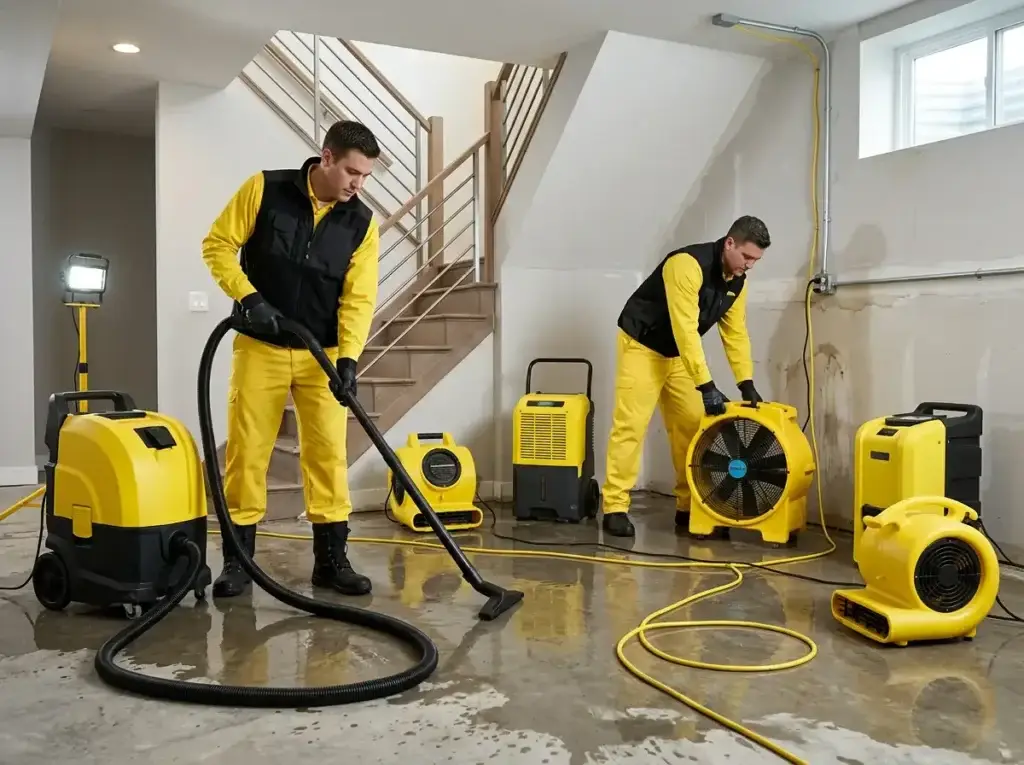
What causes basement water damage, and how is it fixed?
Basement water damage usually comes from storm water seeping through foundation cracks, a failed sump pump, window wells that fill during heavy rain, plumbing leaks or a sewer backup. Fixing it means removing the water, drying concrete and framing to measured levels, cleaning or removing affected materials, then correcting the cause so the next storm does not repeat it.
The restoration steps above cover what happens once water is on the floor. This section looks at why basements in DuPage and Will County take on water, how insurance treats each cause, which finished materials can be saved and how to lower the odds of a repeat.
Why do DuPage and Will County basements take on water?
Basements sit below grade, so they collect whatever the soil, the sewer and the plumbing send their way. Heavy summer thunderstorms saturate the ground, and freeze-thaw winters work at foundation cracks year after year. The Insurance Information Institute notes that basement water is often caused by cracks in foundations or floor slabs, and that new seepage after heavy rain can mean once-waterproof floors and walls have deteriorated. Soil that has settled so it slopes toward the house makes it worse.
- Seepage. Water pushed through cracks, the joint where the floor meets the wall, or porous block.
- Sump pump failure. A burned-out motor, a stuck float switch or a power outage during a storm.
- Window wells. Clogged well drains let water pool against the window until it leaks in.
- Plumbing and appliances. Water heaters, laundry hookups and supply lines, which our burst and leaking pipes service covers.
- Sewer backups. The III explains that in systems that combine storm water and sewage, heavy rain can overwhelm the pipes and push sewage into basements, and tree roots can block the private sewer line.
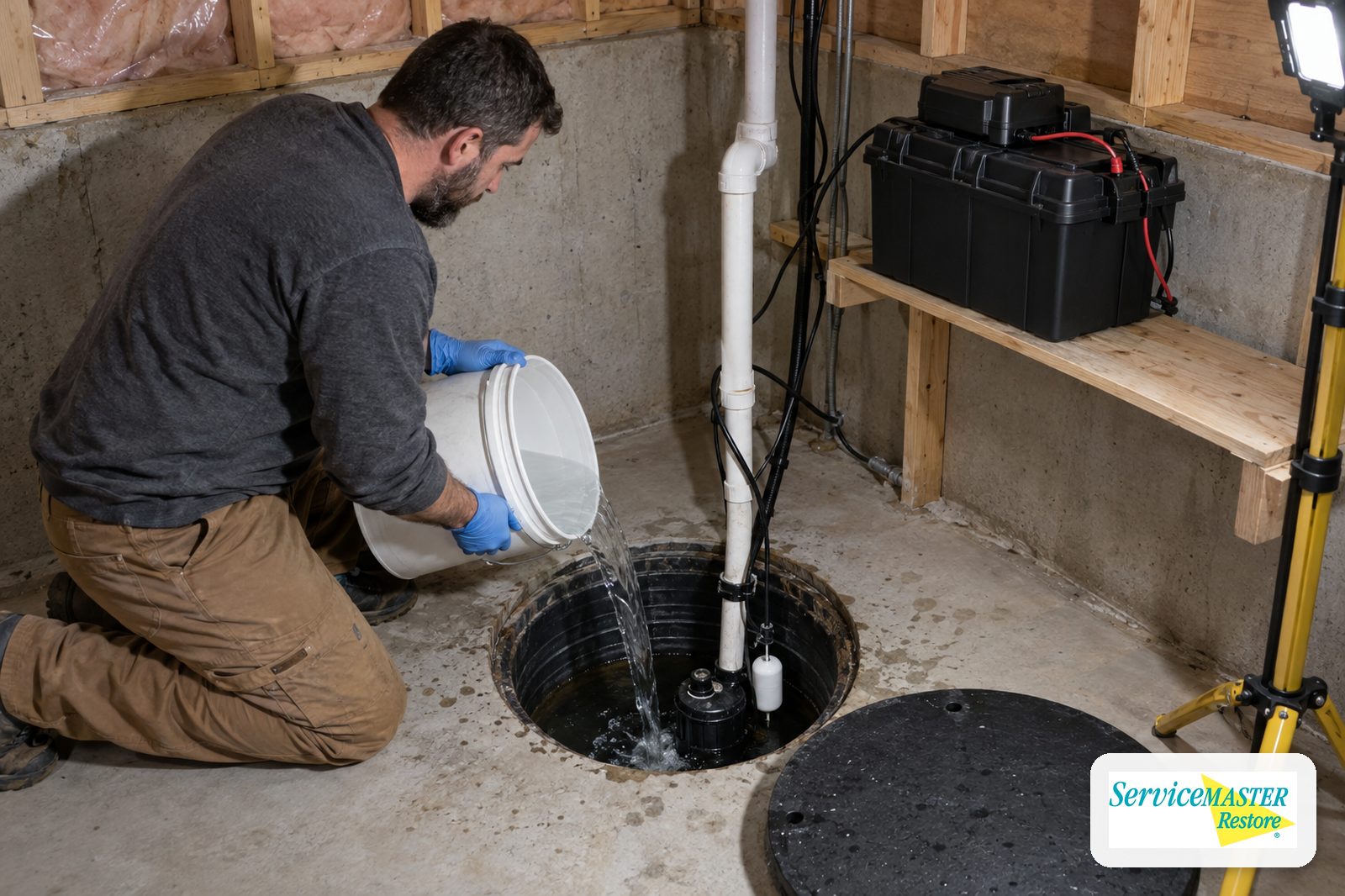
Sump pumps: the basement's first line of defense
Test the pump before storm season by pouring water into the pit and watching it cycle. Make sure the discharge line carries water well away from the foundation. The III recommends a reliable backup power source for outages, noting that continuous power helps keep pipes and a battery-operated sump pump from freezing. It also warns that connecting sump pumps or French drains to the sanitary sewer is illegal. For ongoing problems, our moisture control and long-term prevention service looks at the whole picture.
Which basement water losses does insurance cover?
For basements, the cause of the water decides almost everything. Here is how the main causes usually line up with coverage. Policies vary, so confirm with your agent or the Illinois Department of Insurance.
| Cause | Standard homeowners policy | What usually fills the gap |
|---|---|---|
| Burst pipe or appliance discharge | Accidental discharge from plumbing or a household appliance is a listed covered peril | Not applicable; check your deductible |
| Sewer or drain backup | Not covered under a typical policy | A sewer backup endorsement or separate coverage |
| Flood or surface water | Excluded | An NFIP or private flood policy; NFIP does not cover personal property kept in basements |
| Lack of maintenance | Not covered | Repairs and prevention paid by the owner |
Source: Insurance Information Institute, Which disasters are covered by homeowners insurance?; FEMA FloodSmart, What flood insurance covers
One nuance: FloodSmart says a flood policy would cover damage from a sewer that backed up during a heavy rainstorm, but not a backup caused by clogged pipes. If you are unsure which applies, our insurance claim assistance page explains how documenting the source helps your adjuster decide.
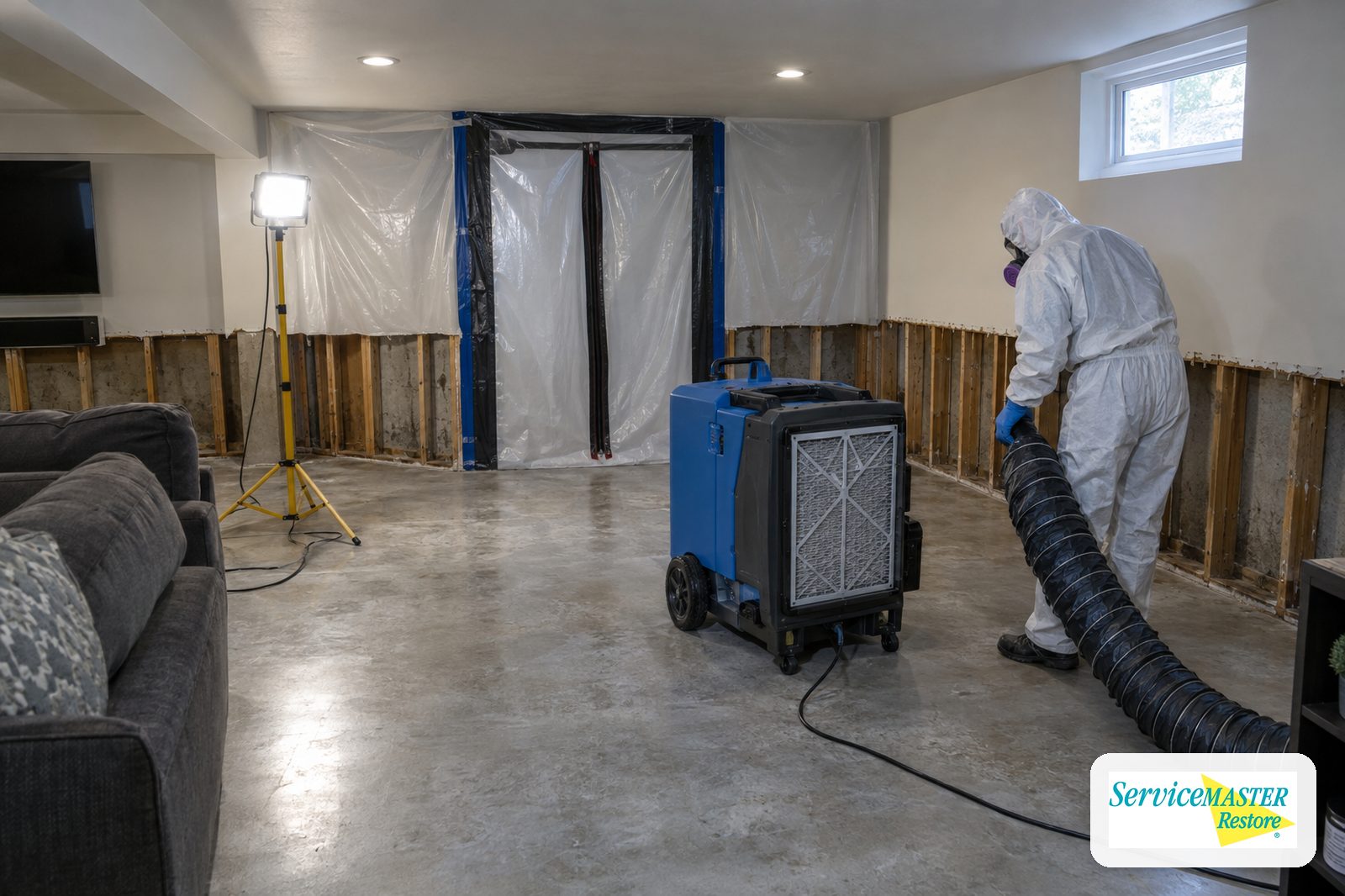
Sewer backups are Category 3 water
The IICRC S500 standard defines Category 3 water as grossly contaminated and lists sewage and waste-line backflows among its examples. The EPA advises calling a professional experienced with contaminated water when damage was caused by sewage. Porous finishes the sewage touched are commonly removed, and the remaining surfaces are cleaned before drying. Our guide to sewage backup cleanup covers health risks and the right sequence.
Which finished-basement materials can be saved?
It depends on the water category, how long materials stayed wet and how they are built. Concrete, block and solid framing can usually be dried in place, though dense materials take longer. Drywall wicks water upward, so restorers often cut it above the wet line to dry the cavity behind it. Fiberglass insulation behind that drywall holds water and is usually replaced. Vinyl plank over concrete can trap water underneath, and laminate and particleboard swell. Carpet pad soaked by clean water is sometimes saved; after sewage, it is not.
The EPA's guide to mold and moisture recommends keeping indoor humidity below 60 percent, ideally between 30 and 50 percent. After a loss, our structural drying and dehumidification work brings materials back to their dry standard, and emergency water removal handles the standing water first.
How can you keep a basement from flooding again?
Prevention is mostly maintenance, done in the right order:
- Move water away outside. Clear gutters and downspouts, point downspouts away from the house and make sure soil slopes away from the foundation.
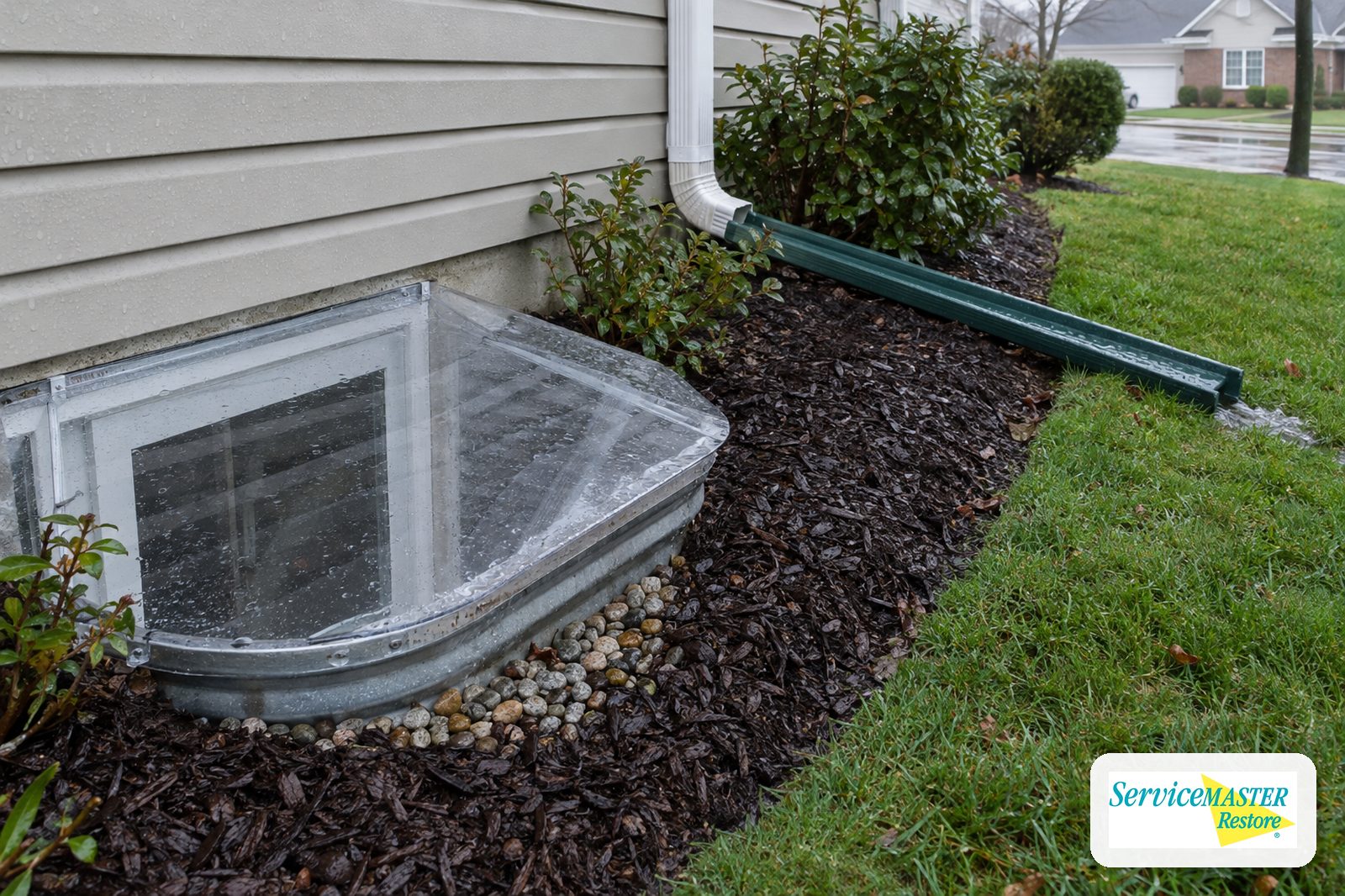
- Clear window wells. Keep well drains free of leaves and debris, and consider covers.
- Seal cracks. The III notes that painting vulnerable areas with water sealant can prevent seepage; larger cracks need a foundation contractor.
- Maintain the sump system. Test the pump, check the float and plan for backup power.
- Install a backwater valve. The III explains that a properly installed and maintained backwater valve lets sewage flow out but not back in. Use a qualified plumber.
- Control humidity. Run a dehumidifier to stay within the EPA's recommended range.
- Review your coverage. Ask your agent about a sewer backup endorsement and flood insurance before storm season.
Basement help across DuPage and Will County
Our certified technicians handle flooded basements from our Lisle headquarters in Naperville, Downers Grove, Warrenville, Villa Park and surrounding towns. Read why DuPage basements flood after heavy rain for emergency steps, see residential water damage restoration for the rest of the house, or start at the water damage hub. You can also contact us online.
Water in the basement right now? Call (630) 241-1111, 24/7.
Frequently asked questions
Does homeowners insurance cover a sewer backup in the basement?
Not under a typical policy. The Insurance Information Institute says sewer backups are not covered by standard homeowners insurance and must be added as an endorsement or bought as a separate product, usually at a nominal cost. FloodSmart notes that a flood policy may cover a sewer that backed up during a heavy rainstorm, but not a backup caused by clogged pipes.
Does flood insurance cover belongings in a finished basement?
Mostly no. FEMA's FloodSmart lists personal property kept in basements among items an NFIP flood policy does not protect, no matter the cause of flooding. Building coverage does include items such as furnaces, water heaters, electrical and plumbing systems, and foundation walls. Store valuables upstairs or in waterproof containers, and ask your agent how your policy treats finished walls and flooring.
What humidity level should a basement be kept at?
The EPA recommends keeping indoor humidity below 60 percent relative humidity, ideally between 30 and 50 percent, and notes a humidity meter is inexpensive. If you see condensation collecting on walls, pipes or windows, the EPA advises acting quickly to dry the surface and reduce the moisture source. A dehumidifier sized for the space keeps a basement in range through humid summers.
How does a backwater valve prevent sewer backups?
A backwater valve is a fixture installed in a sewer line, and sometimes a drain line, in the basement. The Insurance Information Institute explains that a properly installed and maintained valve allows sewage to flow out but not back in, which protects the basement when the sewer system is overwhelmed. Have a qualified plumber install it and check it periodically.
Why is my basement suddenly leaking after years of staying dry?
The Insurance Information Institute notes that new seepage after heavy rain, when you have never had a problem, may mean once-waterproof cement floors and basement walls have deteriorated. Soil that has settled so it slopes toward the house also sends more water down the foundation wall, especially when the ground is already saturated. Sealing cracks and regrading usually come first.
Sources
- Insurance Information Institute (Triple-I): How to protect your home from water damage
- Insurance Information Institute (Triple-I): Protect your home from winter weather
- Insurance Information Institute (Triple-I): Which disasters are covered by homeowners insurance?
- Insurance Information Institute (Triple-I): Protect your house from sewer backups
- FEMA FloodSmart (NFIP): Flood insurance coverage and rates (What's covered)
- US EPA: A Brief Guide to Mold, Moisture and Your Home
- US EPA: Mold Cleanup in Your Home
- IICRC: Category of Water Damage and Weather-related Events (ANSI/IICRC S500 Consensus Body position statement, 2026)