
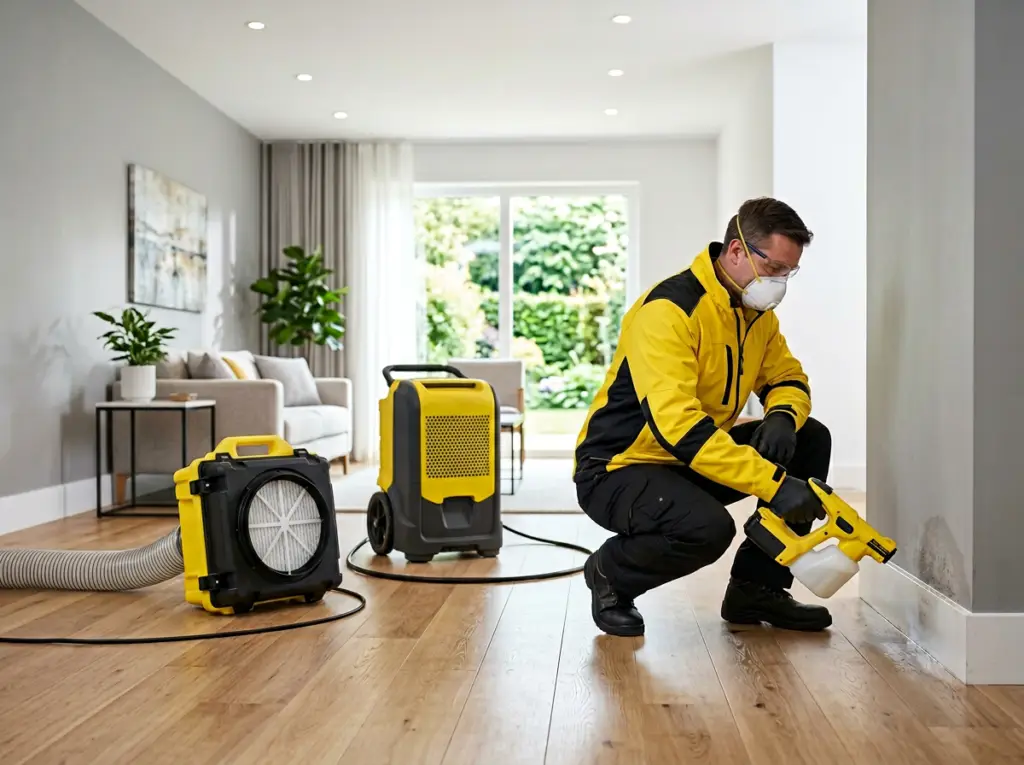

What should you do when a pipe bursts or starts leaking?
Shut off the main water valve, turn off power to wet areas if you can reach the panel safely, and photograph the damage before anything is moved. Then call a water damage restoration company. Clean supply-line water can degrade as it sits, so extraction and structural drying should start as soon as the leak is stopped.
Our first-hour guide, Burst Pipe? What to Do in the First Hour, walks through those steps in order. This page goes one level deeper: why pipes fail in Chicago-suburb winters, how hidden leaks behave, what the IICRC standard says about water quality over time, and how insurance usually treats a sudden break versus a slow drip.
Why do pipes burst in DuPage and Will County winters?
Water expands as it freezes. The American Red Cross notes that this expansion puts enough pressure on metal or plastic pipe to break it, no matter how strong the pipe is. The break often shows up later, when the ice thaws and full line pressure returns.
Our area gets the kind of cold that does this. On January 30, 2019, the National Weather Service Chicago office recorded -23°F at O'Hare, the coldest reading in 34 years, and -24°F at its own office in Romeoville.
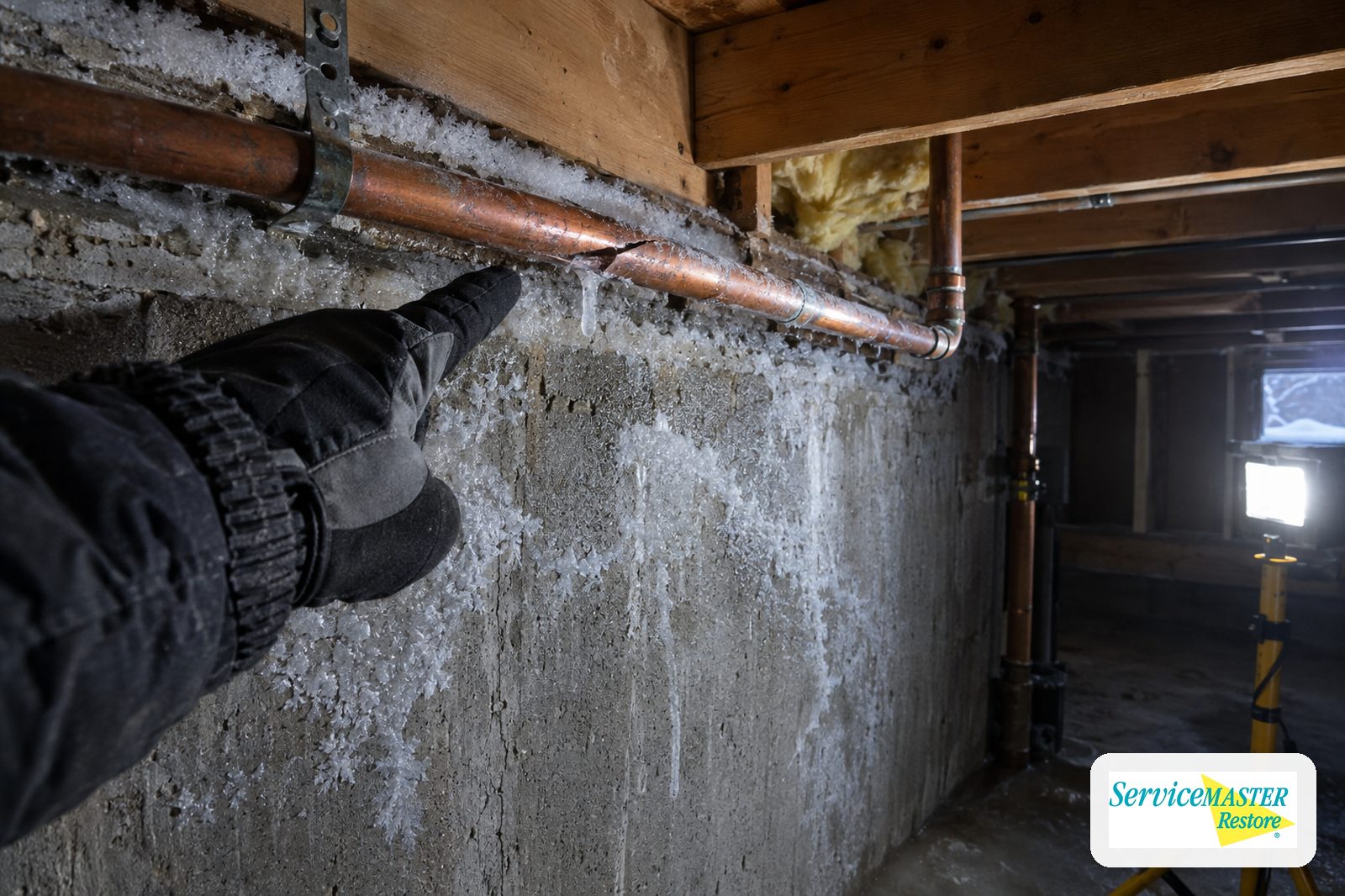
Where pipes freeze first
The Red Cross lists the usual suspects: outdoor hose bibs and sprinkler lines, supply pipes in unheated basements, crawl spaces, attics and garages, lines inside kitchen cabinets, and pipes that run along exterior walls with little insulation. In split-levels and older ranch homes around Downers Grove and Lisle, that often means a bathroom or kitchen wall on the north side of the house.
Prevention is simple and cheap: keep the thermostat at the same setting day and night, let a faucet on an exposed line drip during deep cold, open sink cabinets, and keep heat at no lower than 55°F if you travel. Our fall maintenance checklist covers the rest.
How do slab leaks and in-wall leaks hide?
A burst line announces itself. A pinhole leak in a wall, a weeping compression fitting under a vanity, or a supply line failing inside a slab can run for weeks before anyone sees it. Water follows framing, wicks up drywall and spreads under flooring, so the stain you notice is rarely where the moisture stops.
Signs worth acting on include a water meter that moves when every fixture is off, a warm spot on a slab floor (often a hot-water line), baseboards that swell or separate, paint that bubbles, cupping in hardwood, and a musty smell in one room. The fix for the pipe belongs to a plumber. Finding every wet material belongs to moisture mapping.

Finding the edge of the wet area
Restorers use pin and pinless moisture meters, thermal imaging and thermo-hygrometers to trace how far water travelled inside walls, cabinets and subfloors. The readings are compared against the same materials in a dry part of the home, which gives a measurable target instead of a guess.
That map decides what can be dried in place with air movers and dehumidifiers and what has to be cut out because it is swollen, delaminated or already growing mold.
Why does clean pipe water get worse the longer it sits?
The industry standard for this work is ANSI/IICRC S500, the Standard for Professional Water Damage Restoration (current edition 2021). It sorts water into three categories by contamination. A broken supply line usually starts as Category 1, water from a clean source. A drain or appliance discharge may begin as Category 2. Sewage and rising floodwater are Category 3.
The category is not fixed at the moment of the break. The S500 consensus body's 2026 position statement quotes the standard directly: time and temperature can affect the amplification of contaminants and so change the category. Clean water that soaks into carpet pad, insulation and dust for days in a warm room picks up what it touches.
Mold is the other clock. The EPA's guide to mold and moisture says that if wet materials are dried within 24 to 48 hours of a leak, in most cases mold will not grow. That window is the practical reason to start drying the same day, and the reason our odor, sanitizing and mold prevention work follows long-running leaks.
Share of U.S. homeowners insurance losses by cause
Percent of losses incurred, homeowners multiple-peril policies, 2023
The same Triple-I data shows about one in 60 insured homes files a water damage or freezing claim each year, with an average claim of $15,400 over 2019 to 2023.
Does homeowners insurance cover a burst pipe in Illinois?
Usually, if the break was sudden. The Insurance Information Institute's consumer Q&A, Am I Covered?, answers "yes" for a pipe that bursts and floods the floors, because a standard HO-3 policy covers accidental discharge of water from a plumbing system. Freezing of plumbing is also a named peril on common policy forms.
Gradual leaks are different. Triple-I notes that policies do not cover damage from lack of maintenance, and that groundwater seepage into a basement is excluded. A leak that has clearly been dripping for months, with rot and mold to prove it, can be denied even when the final burst was sudden.
Our guide to what Illinois homeowners insurance covers and our insurance claim assistance page explain the paperwork side.
How is a pipe leak dried out properly?
- Stop the source. The S500 treats source correction as the owner's responsibility, so a plumber repairs or caps the line first.
- Document before demolition. Photos, moisture readings and an inventory of damaged items support the insurance file.
- Determine the category. The restorer decides whether the water is still clean or has become contaminated, which changes what can be saved.
- Extract standing water. Removing liquid water is far faster than evaporating it, which is why emergency water removal comes first.
- Open what traps moisture. Wet insulation, swollen toe-kicks and saturated pad are removed so air can reach the structure.
- Dry to a measured goal. Air movers and dehumidifiers run until materials read close to the dry standard taken from unaffected areas.
- Verify, then rebuild. Final readings confirm the structure is dry before drywall, trim or flooring is replaced.
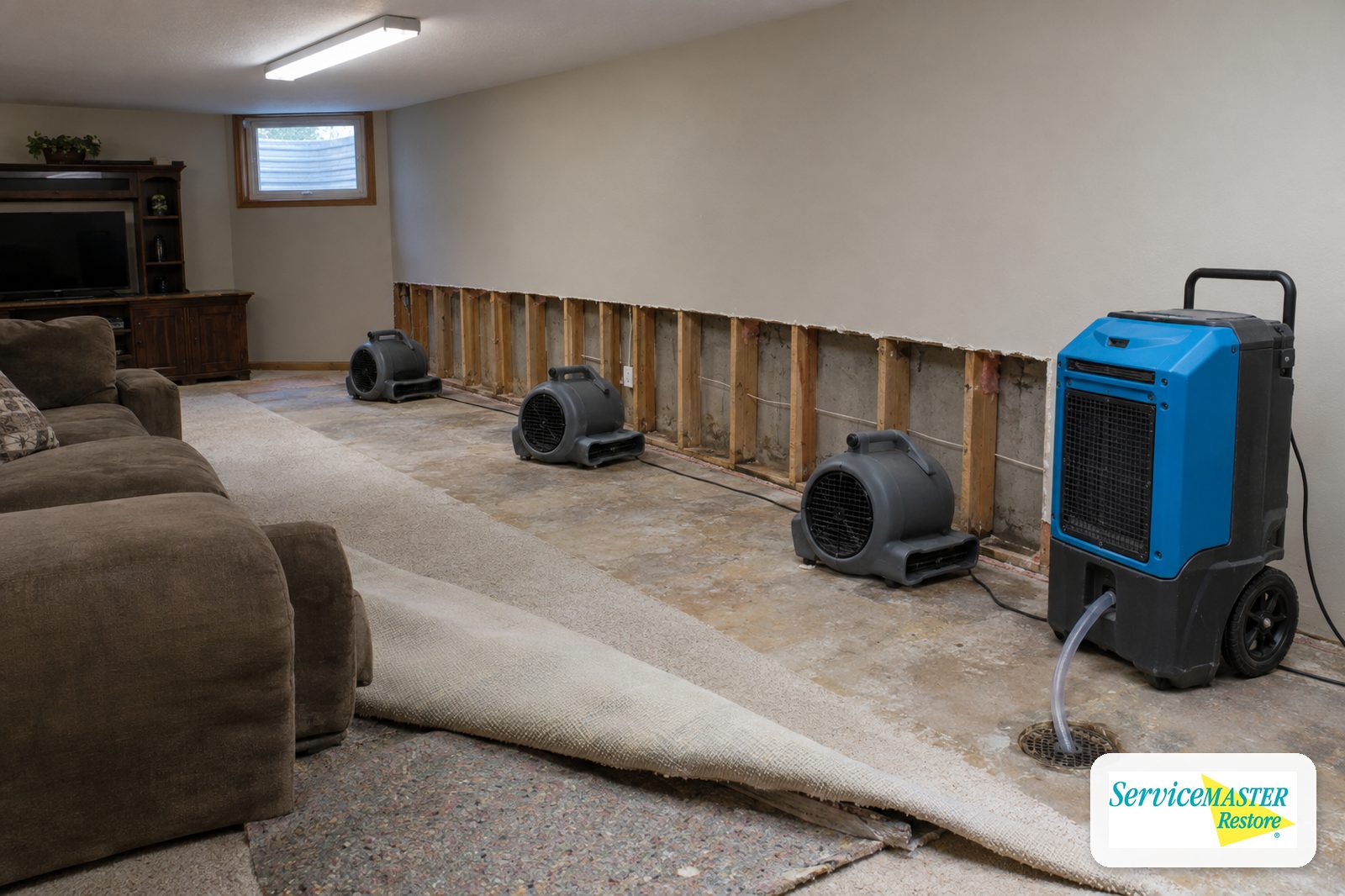
Drying is measured, not timed
A drying setup stays in place until the numbers say the job is done, not for a fixed number of days. Daily readings show whether the equipment is working and when it can be pulled.
For homes from Naperville to Romeoville, our certified technicians handle this as part of our residential water damage restoration and wider water damage restoration service across DuPage and Will County, from our Lisle base.
Have a question first? Send us a message, or for a pipe that is leaking right now, call us 24/7 at (630) 241-1111.
Frequently asked questions
Can I thaw a frozen pipe myself with a hair dryer?
Often, yes. The American Red Cross suggests keeping the faucet open and applying heat with an electric heating pad, a hair dryer, a space heater kept away from anything flammable, or towels soaked in hot water. Never use a blowtorch, kerosene or propane heater, or any open flame. If you cannot find or reach the frozen section, call a plumber, and check other faucets because one frozen pipe often means more.
Why did my pipe only start leaking after it warmed up?
Ice inside the pipe can split it while temperatures are still below freezing, but the ice also plugs the crack. When the section thaws, full water pressure returns and the split starts spraying. That is why burst-pipe calls in the Chicago suburbs often spike on the first mild day after a deep cold snap. Know where your main shut-off valve is before winter so you can close it in seconds.
How can I tell if I have a slab leak?
Common clues are a water meter that keeps moving when every fixture is off, a warm or damp patch on a slab floor, cracked tile or cupped flooring in one area, the sound of running water when nothing is on, and an unexplained jump in the water bill. A plumber confirms and repairs the line; a restorer then measures how far moisture spread into flooring, walls and cabinets.
Does a slow leak under the sink count as sudden water damage for insurance?
It may not. The Insurance Information Institute explains that standard homeowners policies cover sudden, accidental discharge from plumbing but exclude damage from lack of maintenance. A drip that has rotted a cabinet floor over months may be treated as gradual. Coverage depends on your policy wording and the evidence, so report it promptly and ask the Illinois Department of Insurance if you have questions.
How long will drying equipment run after a burst pipe?
There is no fixed number of days. Under the IICRC S500 approach, the restorer sets drying goals based on readings from unaffected materials, then monitors moisture and humidity and adjusts equipment until the wet materials reach those goals. Small kitchen leaks caught early can dry quickly; water that ran inside walls or under hardwood takes longer. The equipment comes out when the numbers, not the calendar, say the structure is dry.
Sources
- Insurance Information Institute (Triple-I): Facts + Statistics: Homeowners and renters insurance
- Insurance Information Institute (Triple-I): Am I Covered?
- Insurance Information Institute (Triple-I): Which disasters are covered by homeowners insurance?
- American Red Cross: Preventing & Thawing Frozen Pipes
- National Weather Service Chicago: January 30-31, 2019: Record to Near-Record Cold in Northern Illinois
- IICRC: Category of Water Damage and Weather-related Events (S500 Consensus Body Position Statement, 2026)
- IICRC: ANSI/IICRC S500 Standard for Professional Water Damage Restoration
- U.S. EPA: A Brief Guide to Mold, Moisture and Your Home
- Illinois Department of Insurance: Property Insurance Consumer Guide
- Restoration & Remediation magazine: The IICRC S500 Approach to Determining Initial Equipment Usage