
What equipment do restoration crews use, and what does each tool do?
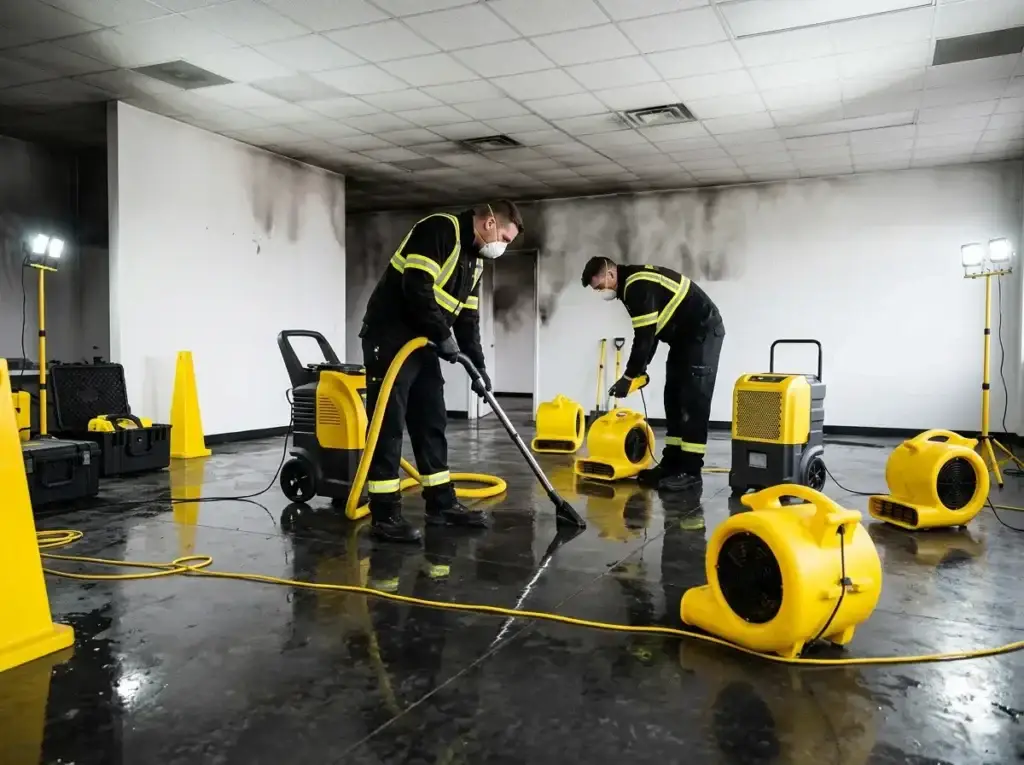
Restoration equipment falls into three groups. Detection tools, such as moisture meters, thermo-hygrometers and thermal cameras, find and measure water. Drying tools, mainly air movers and LGR or desiccant dehumidifiers, remove it. Air-quality tools, including HEPA air scrubbers, negative air machines, thermal foggers and hydroxyl generators, control dust, mold spores and odor.
How do technicians find moisture you cannot see?
Water travels under flooring, up drywall and into wall cavities long before stains appear. Finding the edge of the wet area is the first job, because anything missed keeps feeding odor and mold.
Moisture meters
The EPA's guide to mold remediation in schools and commercial buildings describes moisture meters as tools for measuring moisture content in building materials after water damage and for monitoring drying. Pin meters push probes into the material; pinless meters read through the surface. Both work on carpet, wallboard, wood, brick and concrete.
Thermo-hygrometers
These measure air temperature and relative humidity. Comparing readings in the wet area, an unaffected room and outdoors tells the crew whether the dehumidifiers are actually winning.
Thermal (infrared) cameras
An infrared camera does not see water. It shows differences in surface temperature, and damp materials often read cooler because water is evaporating from them. Missing insulation, drafts or a cold pipe can look the same. As InterNACHI puts it, thermal imaging should be used together with a moisture meter, which verifies each suspect spot.
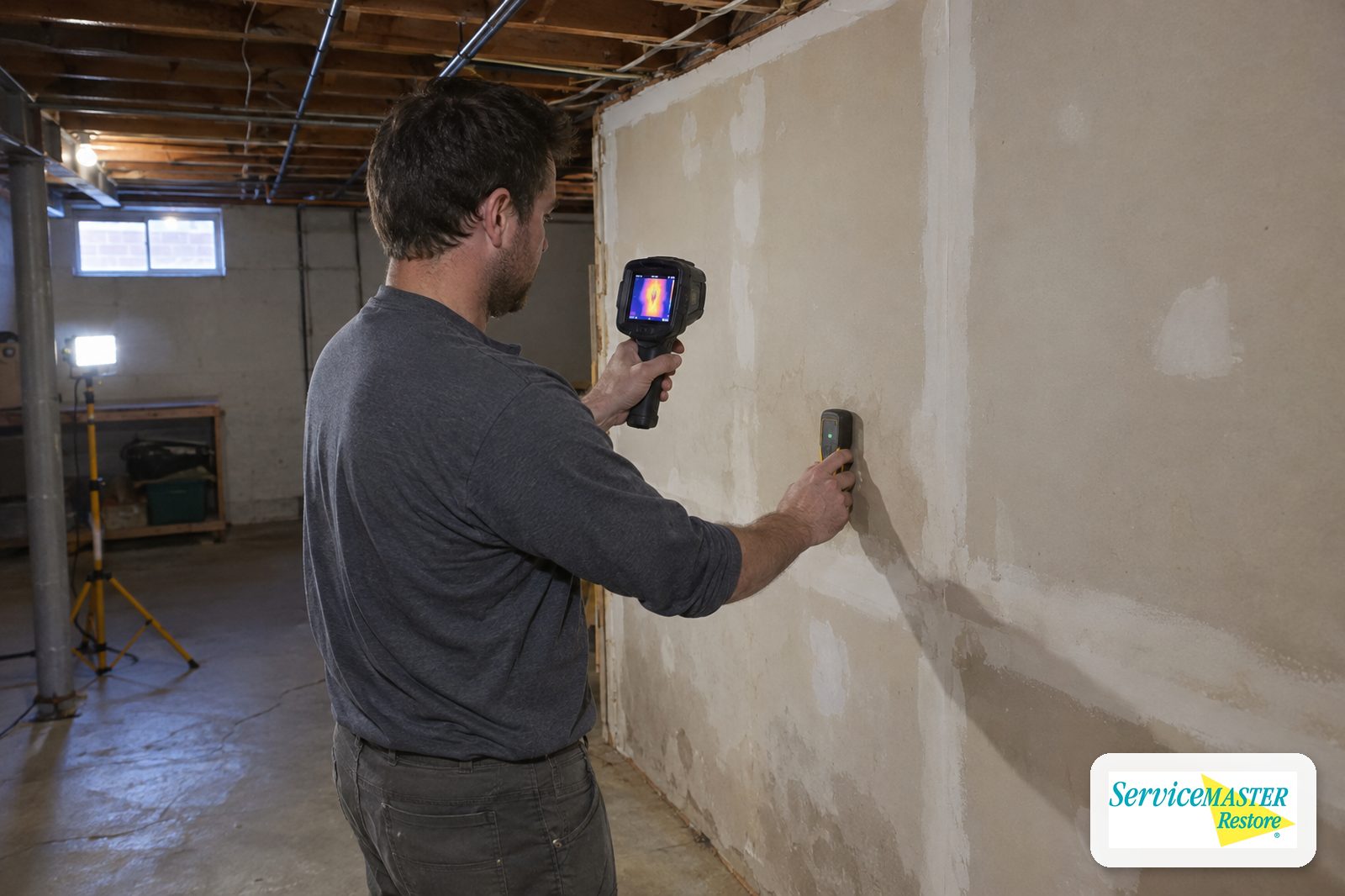
The camera points; the meter confirms
A cool patch on a thermal image is a lead, not a finding. Technicians mark the spot, take a moisture reading, and compare it with a known dry area of the same material before calling it wet.
Restoration equipment at a glance
| Equipment | What it does | Keep in mind |
|---|---|---|
| Moisture meter | Measures moisture content in materials and tracks drying | Readings are compared against a dry reference of the same material |
| Thermo-hygrometer | Measures air temperature and relative humidity | Used to judge whether drying conditions are improving |
| Thermal (infrared) camera | Shows surface temperature differences that can point to wet areas | Does not detect moisture by itself; confirm with a meter |
| Air mover | Pushes air across wet surfaces to speed evaporation | Works with dehumidifiers; without them, it mainly raises indoor humidity |
| LGR dehumidifier | Refrigerant unit that pulls water vapor from the air, including at lower humidity | Performance drops in cold spaces |
| Desiccant dehumidifier | Absorbs moisture onto a drying medium, useful in cold or very large areas | Needs ducting and more setup |
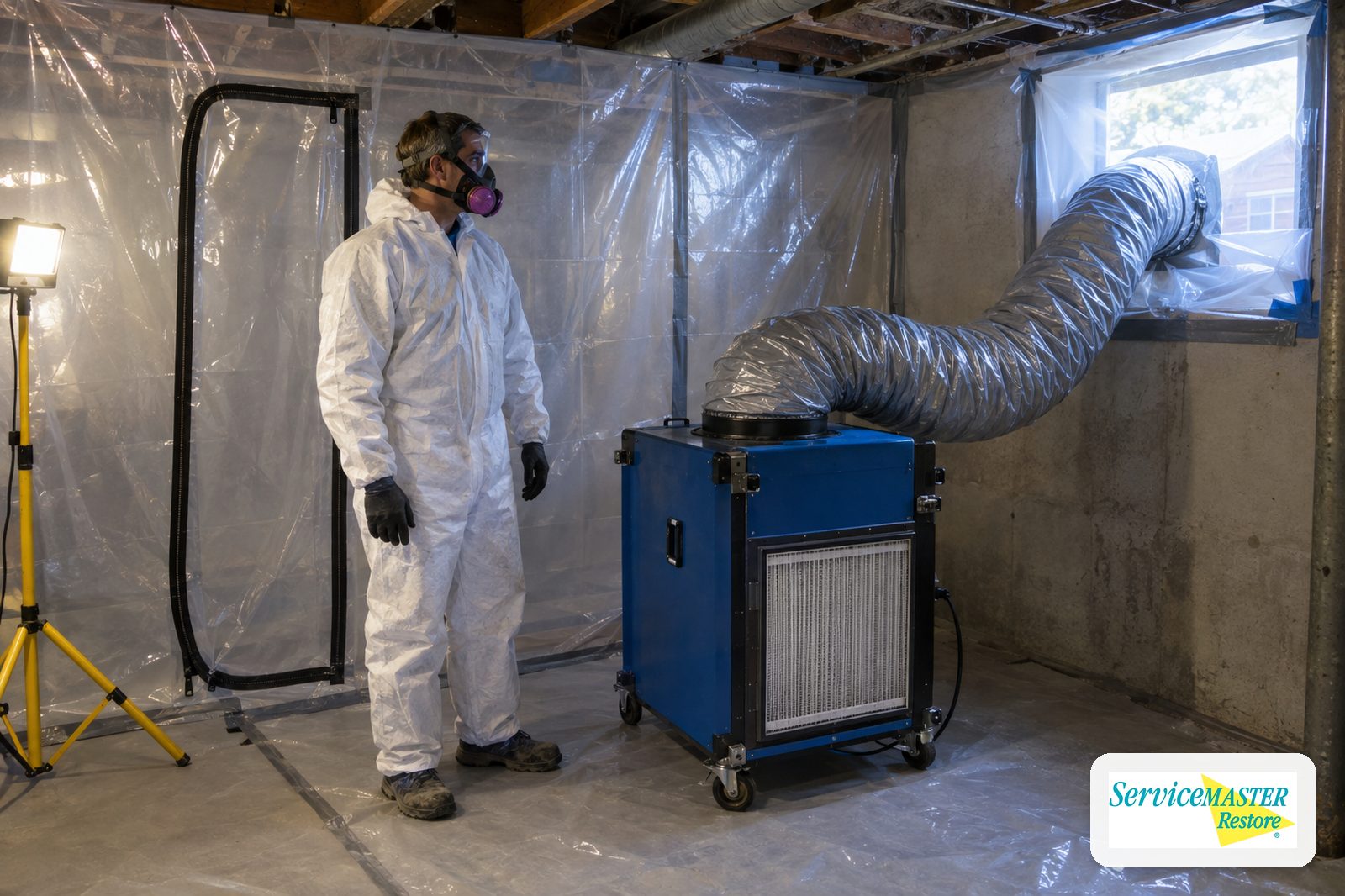
| HEPA air scrubber | Filters airborne particles, including mold spores and soot | HEPA filters remove at least 99.97% of 0.3-micron particles |
| Negative air machine | HEPA unit exhausted outdoors to keep containment under negative pressure | Containment must be sealed to work |
| Thermal fogger | Disperses a heated deodorizing fog where smoke odor has penetrated | Used after cleaning; area vacated during treatment |
| Hydroxyl generator | Uses UV light to create hydroxyl radicals that break down odor molecules | An alternative to ozone; follow manufacturer occupancy guidance |
Sources: U.S. EPA, What Is a HEPA Filter?; U.S. EPA, Mold Remediation in Schools and Commercial Buildings, Chapter 3; InterNACHI, Using IR Cameras for Inspecting Moisture.
How do air movers and dehumidifiers work together?
Drying is psychrometry: moving water from materials into the air, then out of the air. Air movers speed evaporation from wet surfaces; dehumidifiers capture the vapor so it does not condense somewhere else or soak back in. The ANSI/IICRC S500 water damage standard (fifth edition, 2021) treats psychrometry, drying technology and equipment as core parts of the procedure.
Low-grain refrigerant (LGR) dehumidifiers are the workhorse in heated buildings. Desiccant units suit cold spaces, such as an unheated warehouse in January, or projects where very dry air is needed for dense materials like hardwood and plaster. On bigger losses, large-scale structural drying may add ducted or trailer-mounted systems.
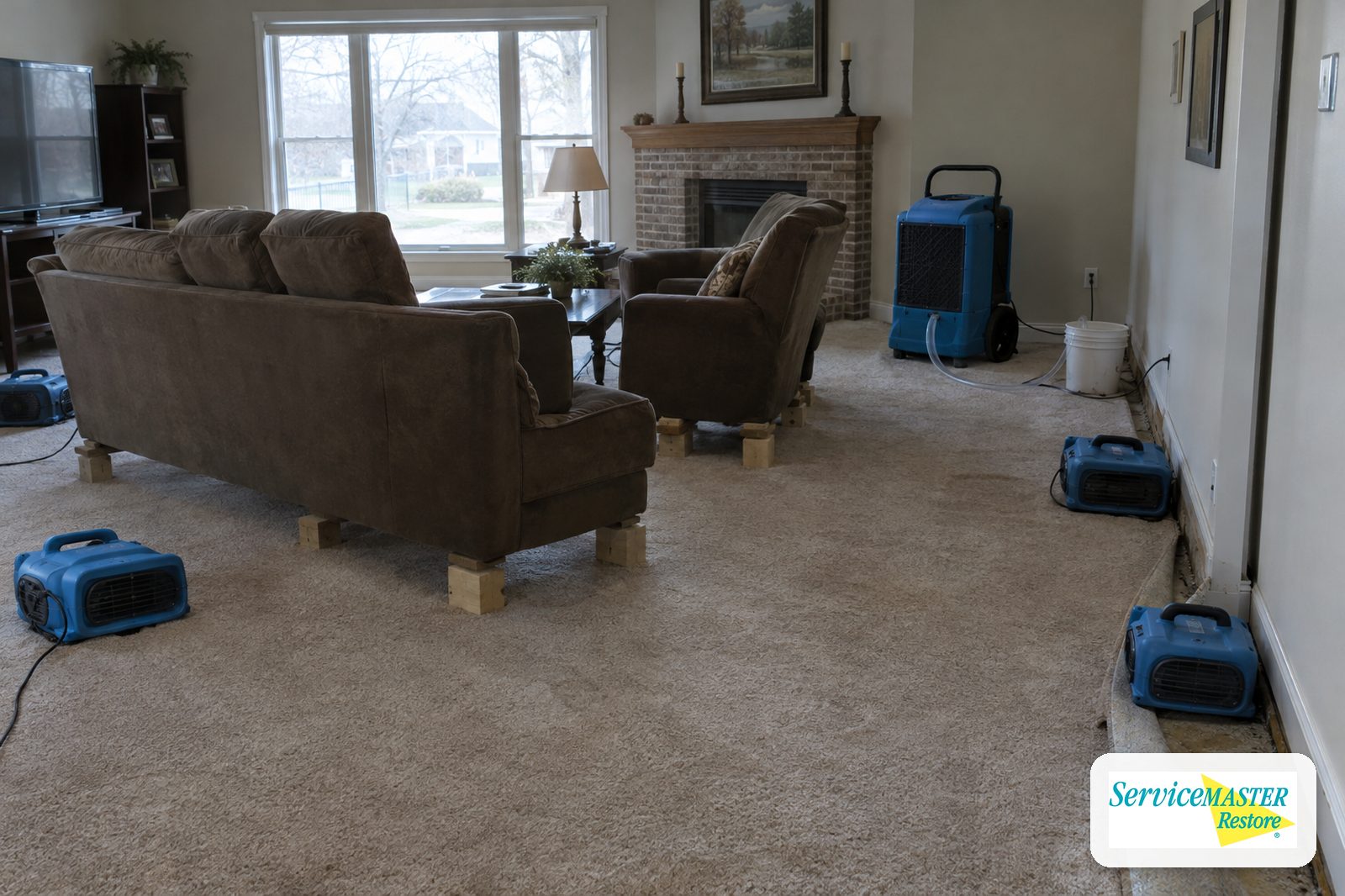
Placement matters as much as horsepower
Air movers are aimed along walls and under lifted carpet edges so air sweeps the wet surface. Dehumidifiers sit where they can draw that moist air in and discharge drier air back across the room.
Which tools control dust, spores and odor?
When mold, soot or sewage is involved, air control becomes part of the job. EPA states that a HEPA filter can theoretically remove at least 99.97% of dust, pollen, mold, bacteria and other airborne particles 0.3 microns in size. Air scrubbers clean the air inside a room, while negative air machines exhaust filtered air outdoors so containment pulls air in rather than leaking it out.
For odor, thermal foggers and hydroxyl generators are used after source removal and cleaning, not instead of them. Ozone generators are a different matter: EPA's review of ozone generators sold as air cleaners notes that no federal agency has approved them for use in occupied spaces, and that ozone can cause health problems at high concentrations.
Odor treatment follows cleaning
Smoke odor lives in residue. Fogging or hydroxyl treatment works on what remains after surfaces are cleaned, which is why it comes late in odor removal and air quality treatment.
How is equipment set up and monitored on a typical job?
- Map the moisture. Take readings in affected and unaffected areas to set a dry standard for each material.
- Extract first. Remove standing water before drying equipment goes in; extraction removes water far faster than evaporation.
- Place air movers. Position units to sweep wet walls, floors and cavities.
- Size dehumidification. Match dehumidifier capacity to the room volume, temperature and amount of wet material.
- Add air filtration if needed. Set up HEPA scrubbers or negative air where mold, soot or sewage is present.
- Monitor and adjust. Record readings regularly, move equipment as areas dry, and remove units only when materials reach the dry standard.
Equipment for DuPage and Will County homes and businesses
Local conditions shape the setup. Humid summers mean dehumidifiers work harder in basements, while unheated garages and warehouses in winter can call for desiccant drying. From our Lisle base we bring drying and air-filtration equipment to properties in Downers Grove, Oak Brook, Willowbrook and Burr Ridge.
See how the equipment is used in structural drying and dehumidification, water damage restoration and commercial water damage restoration, or after a fire under fire damage. Our guide on getting smoke smell out of a house covers odor tools in more depth.
Questions about a drying setup? Contact us or call (630) 241-1111.
Frequently asked questions
Can a thermal camera see water behind walls?
Not directly. An infrared camera shows surface temperature differences, and wet areas often appear cooler because water is evaporating. Drafts, missing insulation and cold pipes can produce the same pattern. InterNACHI notes thermal imaging should be used together with a moisture meter, which confirms whether a suspect spot is actually wet.
What is the difference between an LGR and a desiccant dehumidifier?
An LGR (low-grain refrigerant) dehumidifier cools air over coils so water condenses out, and it keeps working as humidity drops, which suits most heated homes and offices. A desiccant dehumidifier pulls moisture onto an absorbent medium and works well in cold spaces or where very dry air is needed. Many large jobs use both.
Why are fans and dehumidifiers left running for several days?
Surfaces dry quickly, but water inside drywall, subfloors, framing and concrete leaves slowly. Equipment runs until moisture readings in each material reach the dry standard taken from unaffected areas. Turning units off early can leave moisture inside the wall assembly, where it can cause odor or mold later.
Do air scrubbers remove mold and smoke particles?
A HEPA air scrubber captures airborne particles, including mold spores and fine soot. EPA states HEPA filters can theoretically remove at least 99.97% of particles 0.3 microns in size. Scrubbers clean the air, but they do not remove mold or residue from surfaces, so source removal and cleaning still come first.
Is ozone safe for removing odors from a house?
EPA's review of ozone generators sold as air cleaners notes that no federal agency has approved them for use in occupied spaces and that ozone can cause health problems at high concentrations. If ozone is used for severe odor, people, pets and plants should be out of the space. Many restorers use hydroxyl generators or thermal fogging instead.
Sources
- U.S. Environmental Protection Agency: Mold Remediation in Schools and Commercial Buildings, Chapter 3
- InterNACHI: Using IR Cameras for Inspecting Moisture
- U.S. Environmental Protection Agency: What Is a HEPA Filter?
- IICRC: ANSI/IICRC S500 Standard for Professional Water Damage Restoration
- U.S. Environmental Protection Agency: Ozone Generators That Are Sold as Air Cleaners