
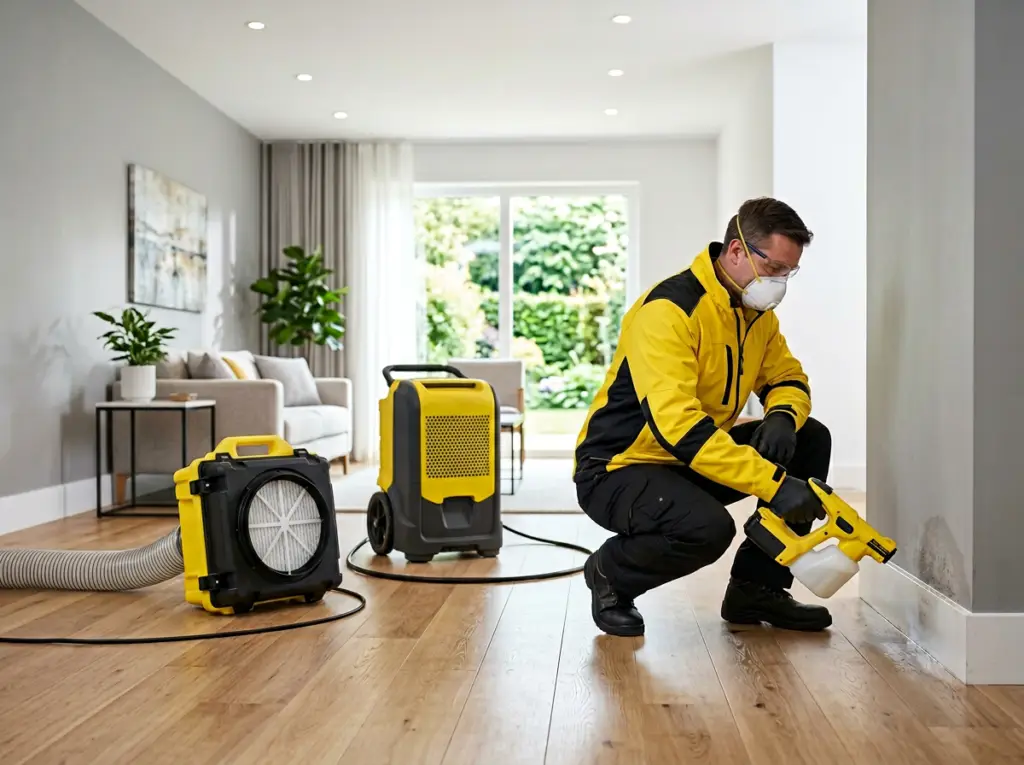

What is commercial damage mitigation, and how is it different from restoration?
Mitigation is the emergency work that stops a loss from getting worse: controlling water, extracting it, removing what can't be saved, protecting equipment and stock, securing openings and starting drying. Restoration comes after and returns the property to its pre-loss condition. Insurers expect prompt mitigation, so it usually starts before the full repair scope is agreed.
For a business, the line between the two phases matters for three reasons: it decides how fast you reopen, it shapes how the claim is documented, and it is where most avoidable losses happen. This page explains the insurance concept behind mitigation, what the first day looks like, and how to tie it into your continuity plan.
What does the "duty to mitigate" mean in a property claim?
Property policies generally expect the insured to take reasonable steps to protect the property after a loss. Illinois regulators put it plainly for homeowners. The Illinois Department of Insurance's Property Insurance Consumer Guide says it is your responsibility to mitigate against the possibility of further damage, which may include contacting utility providers to shut off service, and to make necessary temporary repairs, such as boarding windows and patching holes, even before you have seen the company representative.
The same guide advises photographing damage before cleanup, saving receipts because insurers reimburse reasonable temporary-repair expenses, and not disposing of items you believe are a total loss until the company representative has examined them. Commercial property policies have their own conditions describing what the insured must do after a loss, so read that section of your policy with your broker before you need it.
| Factor | Mitigation | Restoration |
|---|---|---|
| Goal | Stop the damage from spreading or getting worse | Return the property to its pre-loss condition |
| Timing | Immediately after the loss, through drying | After materials meet drying goals |
| Typical work | Water extraction, removal of unsalvageable materials, contents protection, board-up and tarping, structural drying | Drywall, flooring, ceilings, paint, cabinetry, contents cleaning and rebuild |
| Owner's role | Act promptly, document, keep receipts, preserve damaged items for inspection | Review and approve the repair scope with the insurer |
| Industry reference | ANSI/IICRC S500 inspection, category determination and drying | Building codes and repair trades; S500 covers structural restoration |
Sources: Illinois Department of Insurance, Property Insurance Consumer Guide; IICRC, ANSI/IICRC S500 scope.
What happens in the first day of commercial mitigation?
- Safety survey and source control. Electrical, slip and contamination hazards are checked; the S500 leaves fixing the source to the owner, so plumbers or building engineers stop the water.
- Documentation. Photos, moisture readings and an inventory of affected equipment and stock are recorded before anything is moved or discarded.
- Category determination. The restorer decides whether the water is clean or contaminated, which sets protective measures and what can be saved.
- Protect what still works. Equipment, records and inventory are moved, blocked up or covered to keep them out of the water's path.
- Extract and remove. Standing water is extracted, and saturated materials that can't be dried are removed and set aside for the adjuster where practical.
- Secure the building. Openings are boarded or tarped when storms or fire damage leave the envelope open.
- Start drying and monitoring. Drying equipment goes in, with readings logged so progress is visible to the insurer.
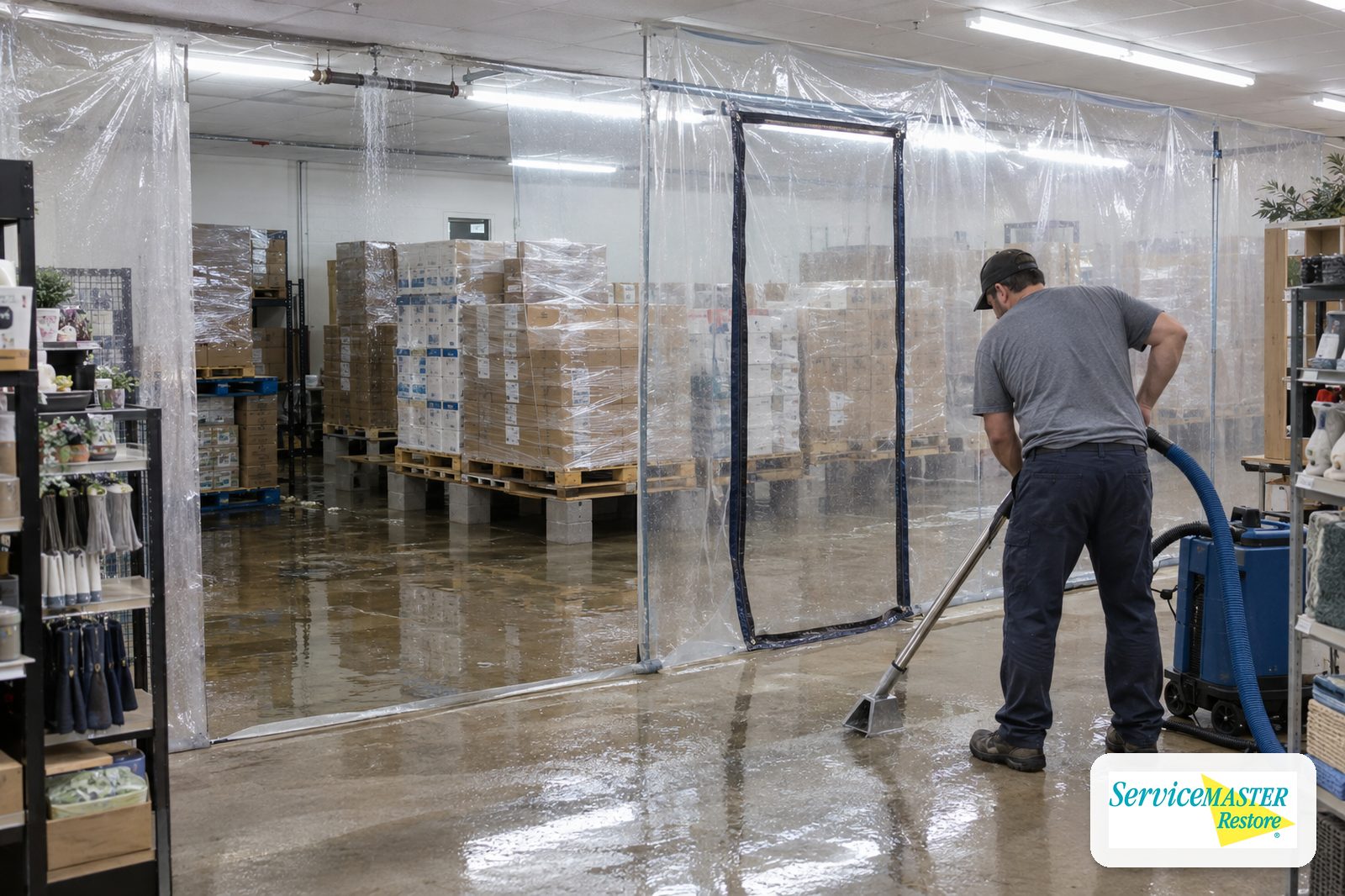
Containment keeps the rest of the building open
Poly barriers and controlled access separate wet or contaminated areas from spaces that can keep operating. That is often the difference between closing one suite and closing the whole building.
Larger losses move into large-scale structural drying, and contaminated water calls for sanitizing and moisture control before drying. Open walls, windows or roofs are handled through emergency board-up and site securing.
How does fast mitigation protect business continuity?
Downtime is often the larger cost. Ready.gov's guidance on business impact analysis lists physical damage to a building, utility outages and restricted access to a site among the disruption scenarios to plan for, and lost or delayed sales, increased expenses, regulatory fines, contractual penalties and customer defection among the impacts.
Timing changes the math. Ready.gov notes that a store damaged in the weeks before the holiday shopping season may lose a substantial share of its yearly sales, and that the business processes with the greatest operational and financial impact should be restored first.
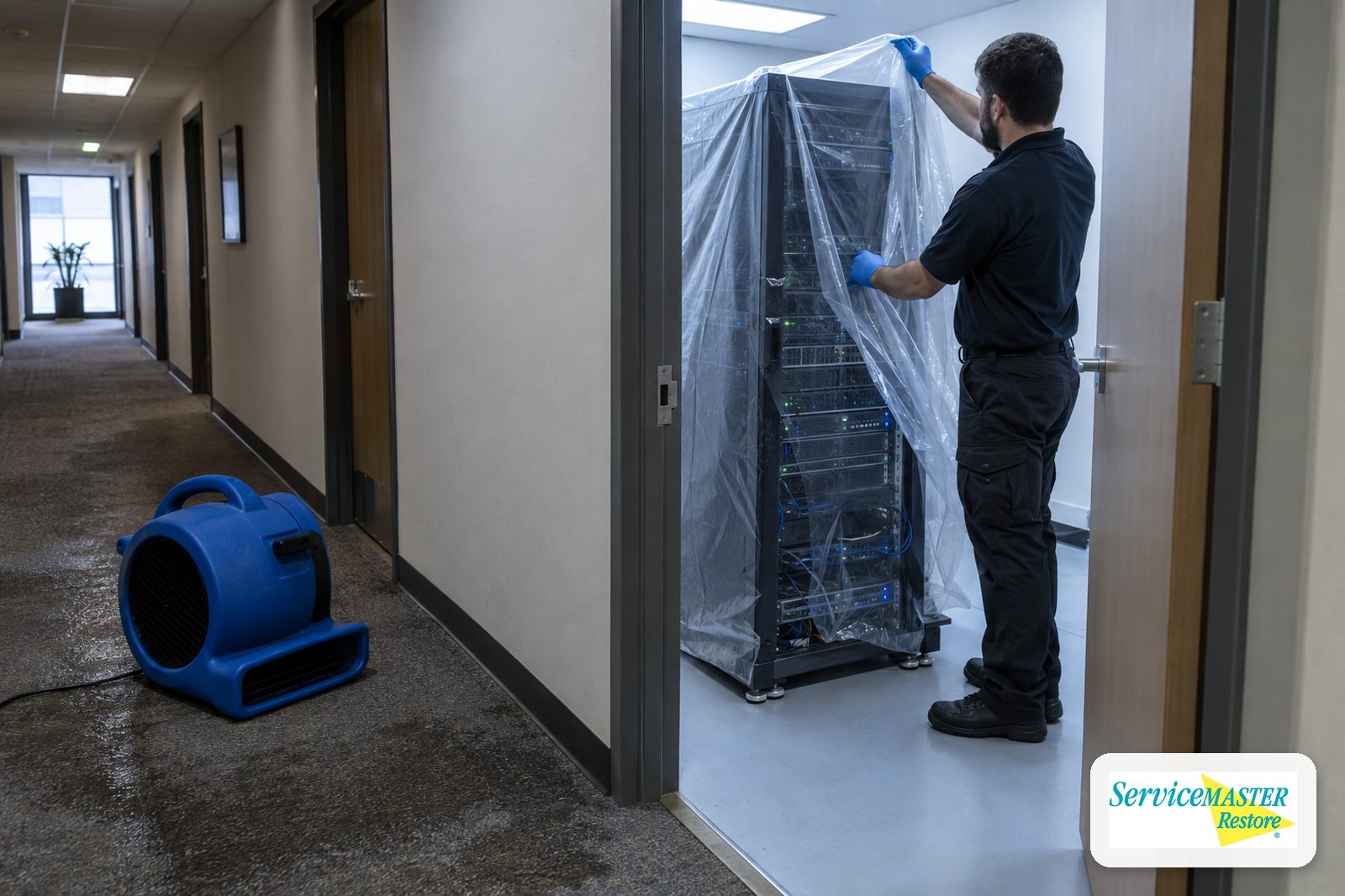
Mitigation should follow your priorities
A restorer can only protect what it knows matters. If your continuity plan says the server room, the walk-in cooler or the dispatch desk comes first, mitigation should start there. Share that list on the first call.
Business income coverage is part of this picture. As the Insurance Information Institute explains in its discussion of business interruption policy language, that coverage generally applies to losses stemming from direct physical loss or damage, so prompt documentation of the physical damage supports both claims.
How should a business prepare before a water loss?
Ready.gov's emergency response plan guidance tells businesses to assess the resources available for incident stabilization, including external resources such as public emergency services and contractors, and to document them in the plan. For water losses, that means a short list kept where everyone can find it.
- Main water, fire-sprinkler and gas shut-off locations, with photos.
- Floor plans marking critical equipment, records and inventory.
- Insurance agent, broker and policy numbers, plus your restoration contractor's 24/7 line.
- Who can authorize emergency work after hours.
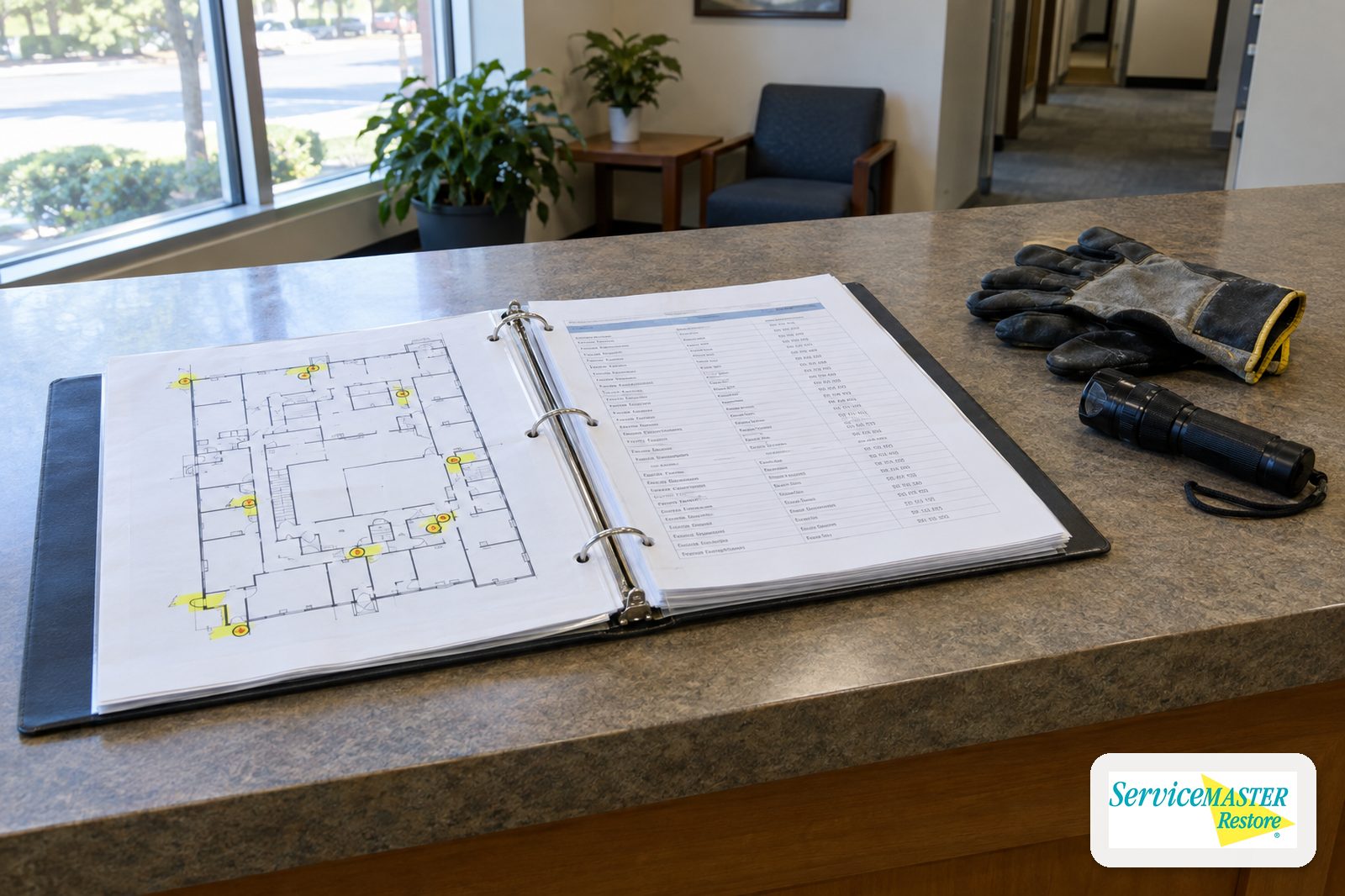
One call starts the clock
Our 24/7 emergency response line is answered around the clock, and our insurance claim assistance team keeps documentation organized for your adjuster. For planning, read our guide to business-continuity restoration in DuPage and Will County.
From our Lisle headquarters, certified technicians support offices, retail, restaurants and industrial sites across Naperville, Lombard and Woodridge, after pipe failures and flood and storm damage alike.
Mitigation is the first phase of our commercial water damage restoration and water damage restoration services. To set up a pre-loss plan, contact our team. For an active loss, call 24/7 at (630) 241-1111.
Frequently asked questions
Will insurance pay for emergency mitigation before the adjuster visits?
Often, as long as the work is reasonable and documented. The Illinois Department of Insurance tells policyholders to make necessary temporary repairs as soon as possible, even before seeing the company representative, and notes insurers reimburse reasonable temporary-repair expenses. Save receipts, photograph conditions before work starts, and notify your insurer promptly. Coverage depends on your specific policy, so confirm details with your agent or broker.
Should we throw out water-damaged inventory right away?
Not before it is documented. The Illinois Department of Insurance advises against disposing of items you believe are a total loss until the company representative has examined them, and recommends a detailed inventory and photos. If spoiled or contaminated goods create a health hazard, photograph and list them, keep samples or labels where practical, and tell your adjuster before disposal.
Does business interruption insurance cover a shutdown after a water loss?
It may. The Insurance Information Institute explains that business interruption coverage can apply to losses stemming from direct physical loss or damage, and losses without physical damage generally are not covered. Whether a burst pipe or flood shutdown qualifies depends on the cause, your property coverage, waiting periods and limits. Ask your broker to walk through your business income and extra expense terms before a loss.
What should our emergency plan say about water damage?
Ready.gov advises businesses to identify the internal and external resources available to stabilize an incident, including contractors, and to document them. For water, list main and sprinkler shut-off locations, critical equipment and records, insurance contacts, your restoration company's 24/7 number and who can authorize after-hours work. Ready.gov also recommends training staff on their roles and running exercises to practice the plan.
How do we decide which areas get mitigated first?
Life safety and source control come first. After that, follow your business impact analysis. Ready.gov says the business processes with the greatest operational and financial impacts should be restored first, and notes timing matters, such as damage just before a peak sales season. Tell your restorer which rooms, systems and inventory are critical on the first call so crews protect those areas immediately.
Sources
- Illinois Department of Insurance: Property Insurance Consumer Guide
- IICRC: ANSI/IICRC S500 Standard for Professional Water Damage Restoration
- Ready.gov (U.S. Department of Homeland Security): Business Impact Analysis
- Ready.gov (U.S. Department of Homeland Security): Emergency Response Plan
- Insurance Information Institute (Triple-I) blog: Business interruption coverage: policy language rules