
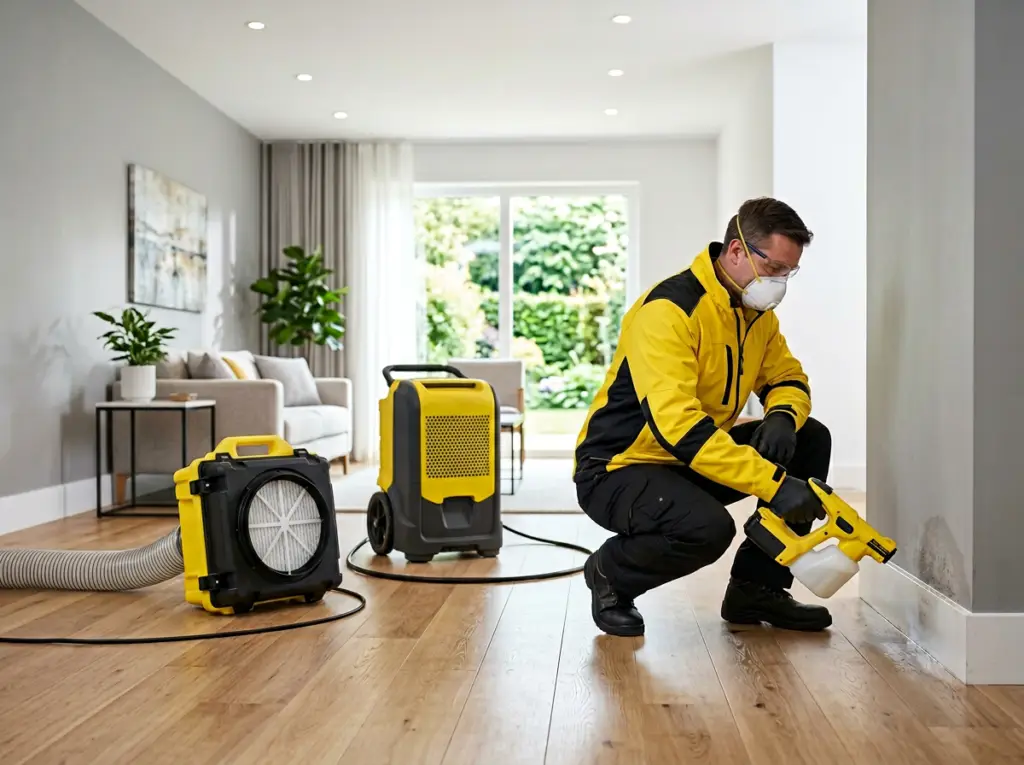

What makes a structural drying project "large scale"?
A large-scale drying project covers multiple floors, units or tens of thousands of square feet, often in an occupied commercial building. It typically calls for high-volume desiccant or trailer-mounted dehumidification, temporary power, zoned containment and a written drying plan with daily logs. The ANSI/IICRC S500 standard treats large or catastrophic projects as their own topic.
This page is written for facility managers, property managers and building owners. Home-scale drying science is covered on our structural drying and dehumidification page. Here the questions are different: how the plan is built, which equipment scales, where the power comes from, and what records your adjuster and leadership will ask for.
How is a drying plan built for a commercial loss?
It starts before the first truck arrives. The S500, as quoted in the IICRC consensus body's 2026 position statement, lists what a restorer should gather at first contact: structure type and use; source, date and time of the intrusion; whether the source is controlled; the size of the affected area, including the number of rooms and floors; suspected contaminants; building and water-damage history; materials affected; building age; and number of occupants.
Facility teams speed this up by having floor plans, shut-off locations, riser diagrams and a list of critical spaces ready. Those spaces, such as server rooms, records storage, tenant suites and inventory, set the drying sequence.
Zones keep the building working
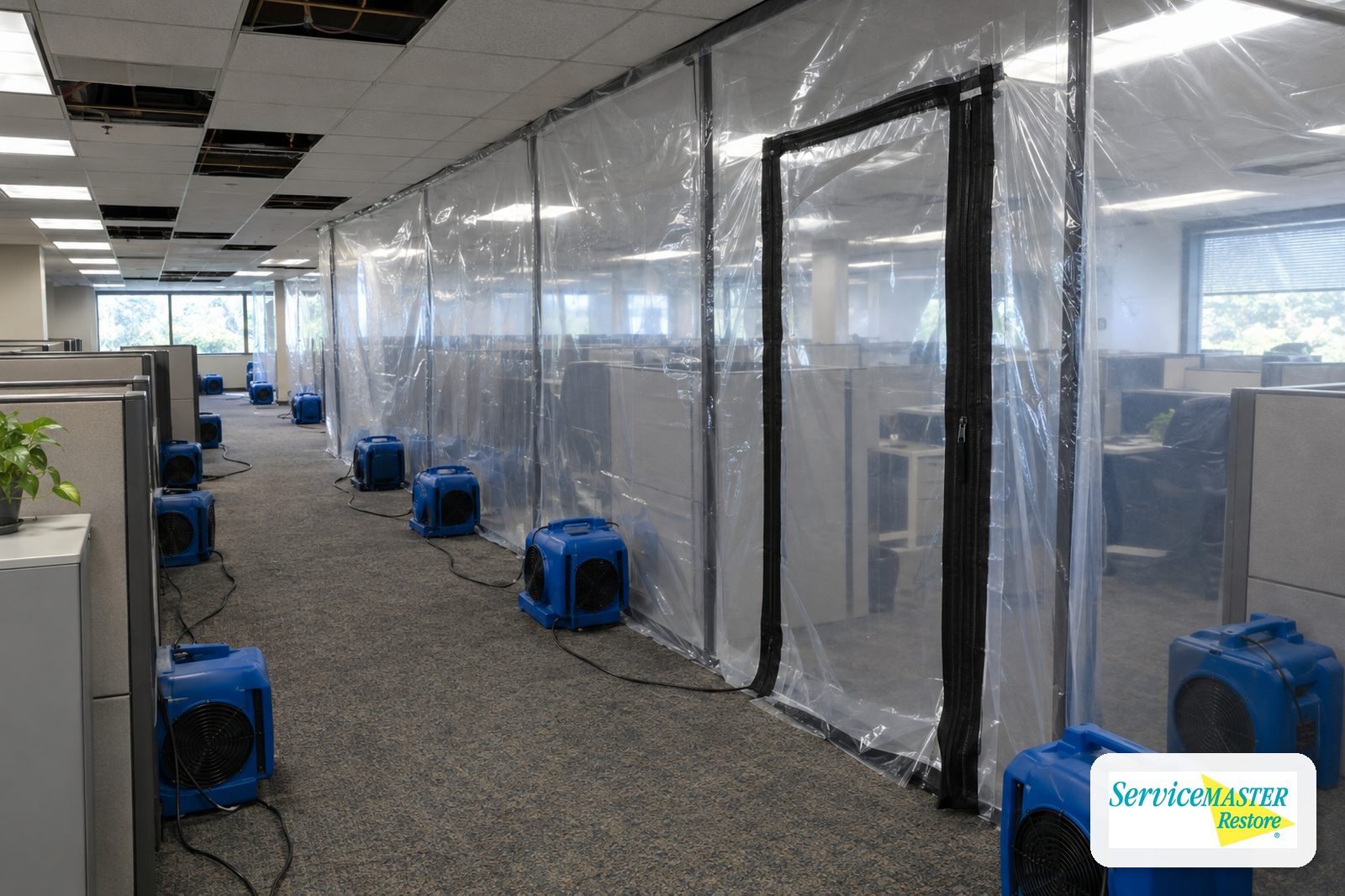
Large losses are divided into drying zones separated by poly containment. Each zone gets its own equipment, readings and target, so a dry wing can return to service while a wet one keeps running.
Zoning also controls contamination. If any of the water is Category 2 or 3, the standard calls for remediation before restorative drying, with contamination controls and proper worker protection. Our sanitizing and moisture control page covers that phase.
When do desiccant and trailer-mounted systems replace portable dehumidifiers?
Most homes dry with portable low-grain refrigerant (LGR) units. Large commercial losses often switch to desiccant dehumidifiers, which pass air through a slowly rotating silica-gel rotor that adsorbs water vapor, then drive that moisture off with heated reactivation air. Writing in Restoration & Remediation magazine, equipment engineers describe how the two technologies compare.
| Factor | LGR (refrigerant) | Desiccant |
|---|---|---|
| How it removes water | Cools air below its dew point so vapor condenses | Silica-gel rotor adsorbs vapor; hot reactivation air exhausts it outdoors |
| Driest air | Cannot dry air below about a 32°F dew point | Single-digit grains per pound, about 4% RH at 70°F |
| Cool buildings | Less suited when the space is below about 65°F | Described as the only reasonable option below 65°F |
| Energy use | More water removed per kilowatt | About 1–2 pints per kilowatt on electric reactivation models |
| Large-loss setup | Many portable units placed inside | 3,000–10,000 CFM units outside, ducted in; can run on generators, dropped power or propane |
| Typical use | Drywall, carpet and most finished spaces | Large commercial structures, hardwood, plaster, concrete and heavy timbers |
Source: Restoration & Remediation, What You Need to Know About Desiccant Drying (2013, republished 2017)
Pressure is a tool
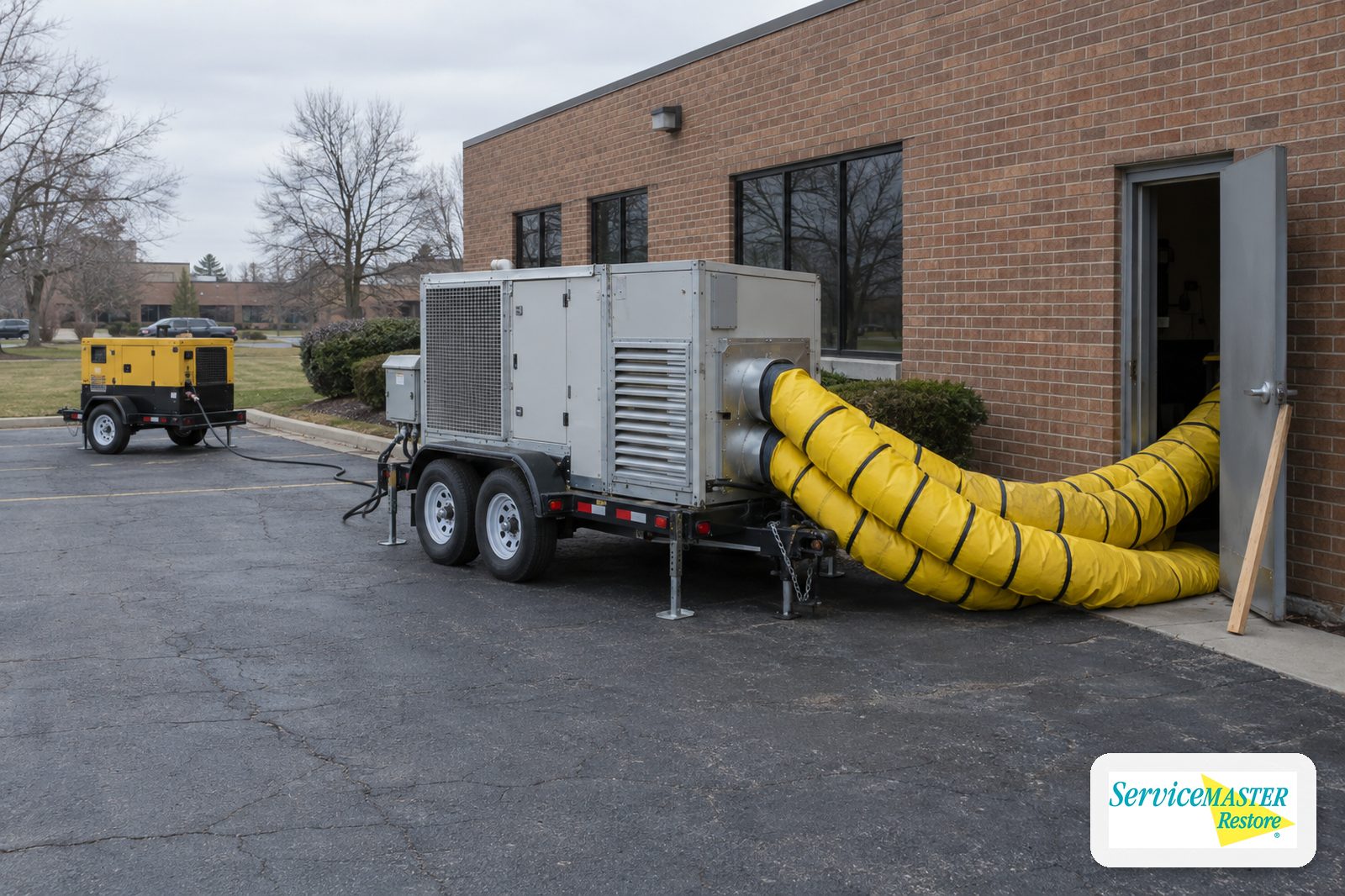
Large desiccants outside a building can push dry air in under positive pressure, which helps early in a dry-down when outdoor air is drier than the wet space. The same authors caution against positive pressure in a contaminated structure, where it can drive contaminants into clean areas.
Negative or neutral setups are chosen instead when containment matters more than speed. That decision belongs in the written plan.
Where does the power come from?
A building with water in its electrical rooms may have no safe power, and even a healthy building often can't feed dozens of drying units on existing circuits. Large-loss crews plan for temporary generators, utility-supplied temporary service or fuel-fired desiccant reactivation.
Generators belong outside. Ready.gov advises running generators outdoors and at least 20 feet from windows to avoid carbon monoxide, and the same rule applies to fuel-fired reactivation exhaust. Facility managers should also confirm that cords, panels and distribution boxes stay out of standing water.
What changes in multi-floor and occupied buildings?
Water goes down. In a mid-rise office or a multi-tenant building, one failed sprinkler or supply riser can soak ceiling cavities, wall cavities and floor penetrations on every level below it. Moisture mapping has to follow that path floor by floor, including elevator pits and mechanical shafts.
The S500 scope also covers HVAC restoration, which matters when air handlers or ductwork took on water. And where the building serves vulnerable occupants, the standard says an indoor environmental professional should be retained when a public health issue exists, for example in elderly care or childcare facilities, public buildings and hospitals.
What documentation will your adjuster expect?
- Initial scope. Source, category determination, affected square footage by floor and zone, and photos before work begins.
- Dry standards and goals. Readings from unaffected materials of each type, which the S500 asks restorers to establish during the initial response.
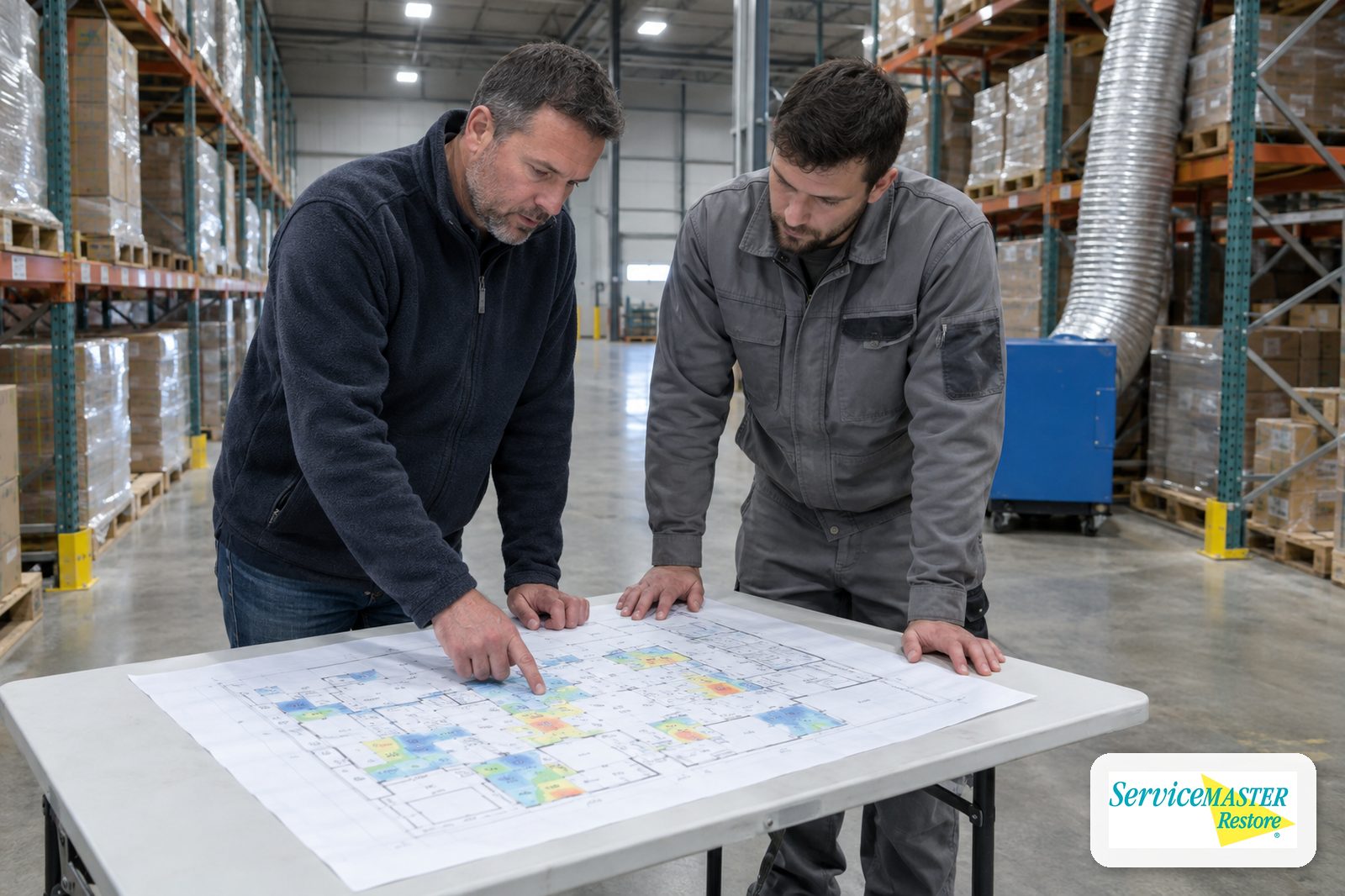
- Moisture maps. Floor plans marked with reading locations and values, updated as the job progresses.
- Daily psychrometric logs. Temperature and humidity inside and outside the affected areas and at dehumidifier outlets, the measurements trade guidance on the S500 lists as relevant.
- Equipment records. What was placed in each zone, when it was moved, added or removed, and why.
- Completion readings. Final values showing each zone met its goal before rebuild.
Logs protect the claim and the schedule
Clear daily records answer the questions adjusters and owners ask: why equipment is still running, why a material was removed, and when a floor can reopen. They also help separate this loss from older moisture problems. Our insurance claim assistance page explains how documentation supports a claim; we document, and you or your broker handle the negotiation.
See our guide to business-continuity restoration for DuPage and Will County companies.
From our Lisle headquarters, certified technicians support office parks in Oak Brook, industrial and distribution buildings in Romeoville and Bolingbrook, and properties across DuPage and Will County. Large drying projects usually begin with emergency water removal and sit within our commercial water damage restoration, damage mitigation for businesses and wider water damage restoration services.
Planning ahead for your facility? Contact us. For an active loss, call 24/7 at (630) 241-1111.
Frequently asked questions
Can our building stay open during large-scale drying?
Often, partly. Contained drying zones let unaffected floors or wings keep operating while wet areas are dried. Whether occupied areas can stay open depends on contamination, safety and noise. The IICRC S500 says an indoor environmental professional should be retained when a public health issue exists, such as in elderly care or childcare facilities, public buildings and hospitals. Plan reopening decisions with your safety team and insurer.
Why does the restoration company want our floor plans and riser diagrams?
The S500 lists information a restorer should gather at first contact, including structure type and use, the source and time of the intrusion, whether it is controlled, the number of rooms and floors affected, suspected contaminants, materials, building age and number of occupants. Floor plans, riser diagrams and shut-off locations answer many of those questions quickly and help size equipment and power before crews arrive.
Who supplies power for the drying equipment?
It depends on the building. Some sites can feed equipment from existing circuits; larger losses use temporary generators, utility-supplied temporary service, or desiccant units that burn propane for reactivation. Restoration trade sources note large desiccants can run on generators, dropped power or propane. Ready.gov advises keeping generators outdoors and at least 20 feet from windows to prevent carbon monoxide exposure.
How often should we receive drying reports?
Ask for daily updates. Trade guidance summarizing the IICRC S500 says psychrometric conditions and moisture content measurements should normally be recorded at least daily, including temperature and humidity inside and outside affected areas and at dehumidifier outlets. A good report shows readings by zone, equipment changes and the remaining gap to each drying goal, which helps adjusters approve the time equipment stays in place.
Why use desiccant dehumidifiers in a cold or unheated building?
Refrigerant dehumidifiers lose effectiveness as air gets cool. Equipment engineers writing in Restoration & Remediation magazine describe desiccants as the only reasonable option when the affected area is below about 65°F, and note they can dry air to single-digit grains per pound, about 4 percent relative humidity at 70°F. That makes them common in winter losses, warehouses and buildings without working heat.
Sources
- IICRC: ANSI/IICRC S500 Standard for Professional Water Damage Restoration
- IICRC: Category of Water Damage and Weather-related Events (S500 Consensus Body Position Statement, 2026)
- Restoration & Remediation magazine: What You Need to Know About Desiccant Drying
- Restoration & Remediation magazine: The IICRC S500 Approach to Determining Initial Equipment Usage
- Ready.gov (U.S. Department of Homeland Security): Power Outages